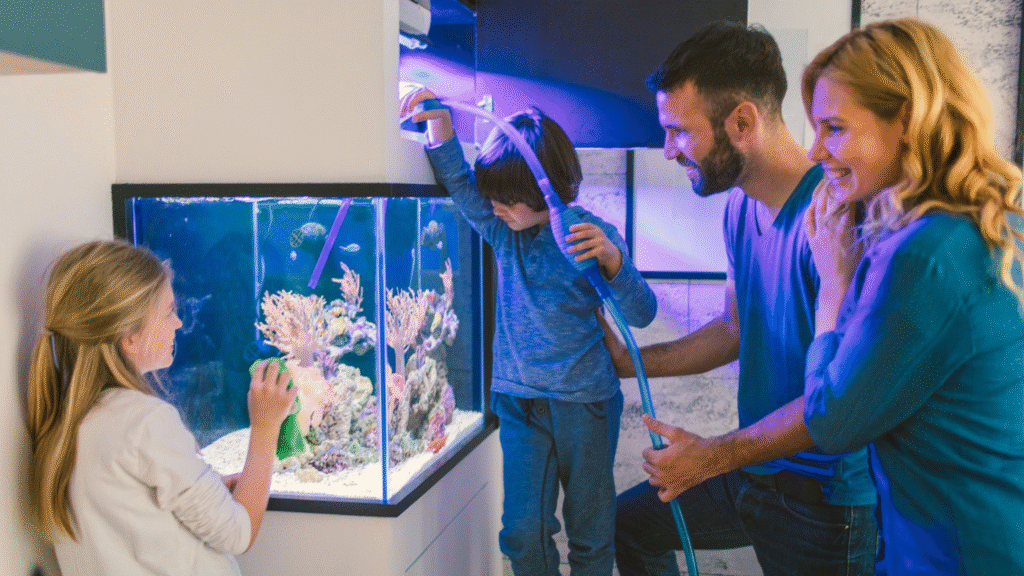
How to clean a fish tank? To clean your fish tank every 1–2 weeks by removing 10–25% of the water, vacuuming gravel, scrubbing algae, rinsing filter media, and testing water parameters. One should not use soap as it damages useful bacteria. The ecosystem needs to be maintained at a constant level by partial cleaning, and deep cleans ought to be avoided unless a serious necessity arises.
Why Regular Cleaning Matters
Tank maintenance also ensures that the water is safe to fish and there is no sudden water chemistry that can occur. Fish are dependent on constant conditions and any minor changes in ammonia or nitrates may be considered as stress. Washing will aid in the avoidance of these damaging spikes.
Algae thrives fast in water that contains nutrients. Unless cleansed regularly, algae may result in blocking of light, reduced oxygen levels and influence plant growth. Early control of the algae maintains a balance of the tanks.
Elimination of waste assists in sustaining a sound nitrogen cycle. Fish do generate waste on a daily basis and food that is not consumed contributes to the accumulation. Frequent washing helps in the beneficial bacteria that decompose the toxins.
A clean tank also prolongs life of such equipment as filters, heaters, and pumps. The accumulation of the debris causes the system to strain. Regular aquarium maintenance increases the performance and the life of the tank.
Cleaning Frequency Guide
A regular fish tank cleaning schedule is an advantage of all aquariums. Bi-weekly and monthly activities assist in the maintenance of water quality without interfering with the useful bacteria.
Weekly Tasks
- Test Water (pH, Ammonia, Nitrites, Nitrates): The initial testing will provide the indicator of the proper functioning of the tank cycle. These figures inform you when there should be changes made on water earlier.
- Check Temperature: Ensure that the heater is stable and the temperature is constant. Varying conditions may exert pressure on fish and affect dietary habits.
- Remove Visible Debris: Clean with a net to get rid of und eaten food or floating debris. This is to stop putrefaction and manage the ammonia.
- Clean Glass Inside: Before it turns hard to control, a light scrub is used to remove the algae. The continuous aquarium maintenance maintains the tank empty.
Bi-Weekly Tasks
- 10–25% Water Change: The extraction of part of the water lowers the nitrates. Controlled water maintains a balance of the tank with fresh conditioned water.
- Vacuum Gravel: This is done using a siphon to remove the debris on the substrate. Waste soaks in gravel and it must be removed to avoid accumulation.
- Trim Plants: Dead or overgrown foliage should be trimmed in order to retain healthy growth. This would make the tank appear neat and clean.
- Clean Decorations (If Needed): Take away objects that have observable trash or bio cover. Wash with care not to get rid of good bacterium.
Monthly Tasks
- Rinse Filter Media: To maintain bacteria, put old tank water into small sponges or pads. This enhances the circulation leaving the cycle intact.
- Check Equipment (Heater, Filter, Air Pump): Check to see that there is no clogging, mineral formation, or guilty sound. Breakdowns are avoided through aquarium maintenance of equipment.
- Deep Clean Algae: cleanse stubborn algae on scrub surfaces. This does not allow it to propagate rapidly.
- Inspect for Damage: Search around tank cracks, tube cracks, and fittings cracks. Leaks or system failure can be avoided through early repair.
Supplies You Need
To get the answer of how to clean a fish tank you need with the appropriate equipment,it will be easier and safer to clean the tanks. Diversion of aquarium supplies prevents the use of household substances which cause contamination.
- Gravel Vacuum/Siphon: Disposes trash during replenishment of water. You will need to select a tank-matching size.
- Algae Scraper: An acrylic or glass surface can be removed with the help of a plastic scraper or magnetic cleaner. Select a scraper that will not leave the surface scratched.
- Bucket (Aquarium Use Only): Get a bucket, which does not contaminate with soap or cleaners. Label it to avoid mix-ups.
- Water Conditioner: Removes chlorine and chloramine in drinking water. Necessary as a fish protection measure.
- Test Kit: Check for pH levels, ammonia, nitrites and nitrates. Monitoring will aid in avoiding chemical issues with water.
- Fish Net: Applicable when clearing the debris or temporarily transporting fish.
- Soft Cloth: Clean up the outside of the glass to make the tank appear clear.
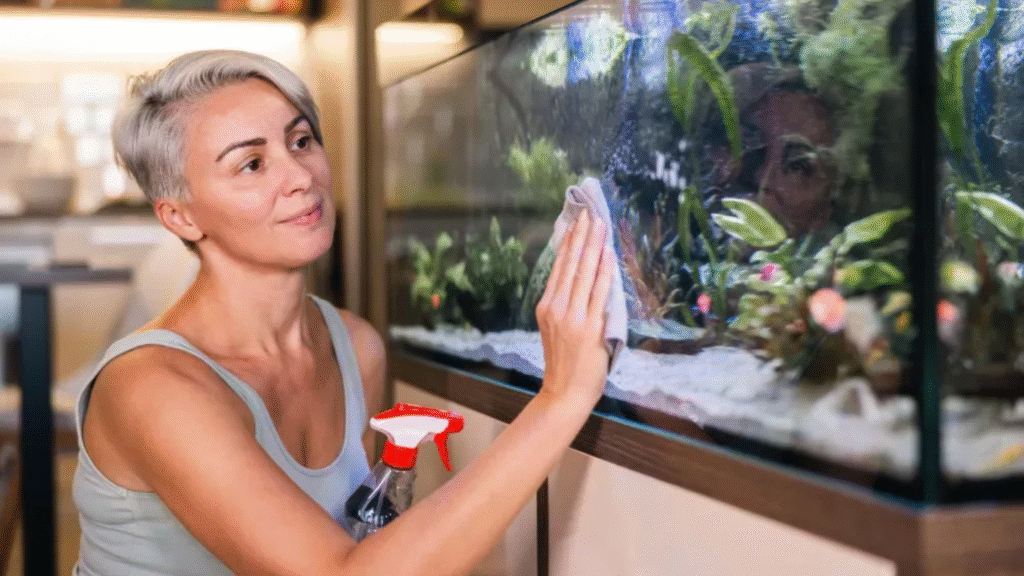
Step-by-Step Cleaning Process
You should do one step at a time in order to have a clean tank without interfering with the ecosystem. Through the correct cleaning, the beneficial bacteria that ensure the water is safe are maintained.
Step 1: Prepare
Before any cleaning process, unplug the heater and the filter. This will avoid damage to equipment and will eliminate electrical hazards. Prepare all the supplies around the tank so that there is a smooth flow of the process. Do not make anything go in the tank with soap or household chemicals.
Step 2: Remove Algae
Clean the glass using an algae pad or scraper. advance slowly, steadily, in order not to stir up dust. In case there are observable algae in decorations they can be scrubbed with a soft brush. One should never extract the algae to the last bit since it sustains the micro-ecosystem of the tank.
Step 3: Vacuum Gravel
Position the siphon into the substrate to extract garbage caught between gravel particles. Adjust the siphon carefully and slowly about the entire bottom. Do not disturb the small aquascapes or other plants with the root of living plants. Eliminate 10-25 percent of the water in the tank in the process.
Step 4: Clean Decorations
Take away only those which are very dirty. Wipe them mildly with a bucket of archaic tank water so as to retain useful bacteria. Always avoid use of soap because it deposits remains that are toxic to fish. Porous objects can be boiled in order to clean out stubborn traces.
Step 5: Clean or Replace Filter Media
Along with this, it would hurt bacteria but not remove debris; water in old tanks or poultry water should be used to rinse sponges and pads. Activated carbon should be replaced on a monthly basis since it becomes congested. Do not dip off all filter media at the same time. Retention of a bit of the old media would stabilize the nitrogen cycle.
Step 6: Refill Tank
Add dechlorinated tap along with pre-conditioned water in the tank. Adjust the temperature to within +-2deg F to avoid shocking your fish. Pour the water gradually and use a cup or plate in order to minimize turbulence. Always add a conditioner to new water in order to neutralize chlorine.
Step 7: Restart Equipment
Once the heater has been plugged in again, start the filter once the water has been raised to normal level. Hear strange sounds that may indicate blockages or air blockage. Ensure normal operation of the heater. The tank after cleaning has to be stable, and this is made by proper functioning.
Step 8: Test Water
Allow a time of about 24 hours and test water again. Check the PH level, ammonia, nitrite and nitrate level to make sure that the tank is back in balance. Document the outcomes and use them to monitor the changes over time. This assists in identifying issues early enough before they escalate.
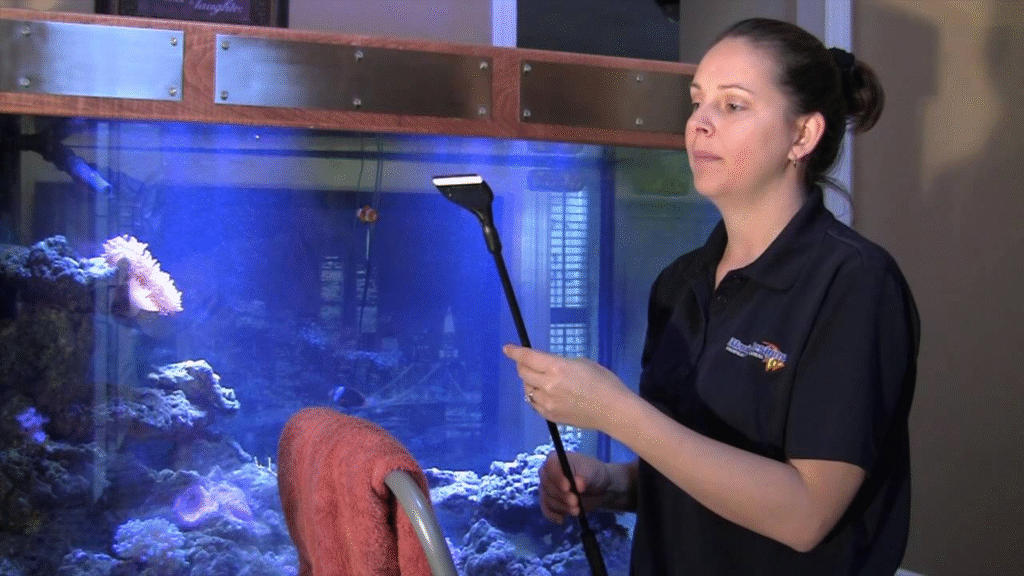
Common Cleaning Mistakes
Avoiding these mistakes keeps your aquarium healthy and reduces the risk of harming fish. Many issues come from over-cleaning or using unsafe products.
- Cleaning Everything at Once: Removing too much at one time wipes out beneficial bacteria. This can destabilize the nitrogen cycle.
- Using Soap or Household Cleaners: Soap leaves residue that is toxic to fish. Only use water and aquarium-safe tools.
- Removing All Decorations Simultaneously: Fish rely on decorations for hiding and comfort. Removing them all at once causes stress.
- Over-Cleaning: A tank that looks spotless may actually be unbalanced. Healthy tanks still have light algae and natural biofilm.
- Not Matching Water Temperature: Sudden changes in temperature can shock fish. Always pre-adjust new water.
- Replacing Entire Filter at Once: Replacing all filter media removes essential bacteria. Always rotate replacements.
Cleaning Different Tank Types
There are different types of how to clean a fish tank Different aquarium setups need slightly different maintenance styles. Adjust your cleaning approach to match your tank.
Freshwater Tanks
Ordinary freshwater tanks need to be changed and cleaned of gravel frequently. Pollution accumulates at a rapid rate, thus garbage disposal stabilizes the price of ammonia. The maintenance of filters and algae control is useful in maintaining a clean tank.
Saltwater Tanks
Seawater aquariums are also obligatory to be tested regularly as marine life is very sensitive to minor changes. The equipment like protein skimmers should be washed on a regular basis. Close attention should also be paid to salt levels in order to prevent sharp changes.
Planted Tanks
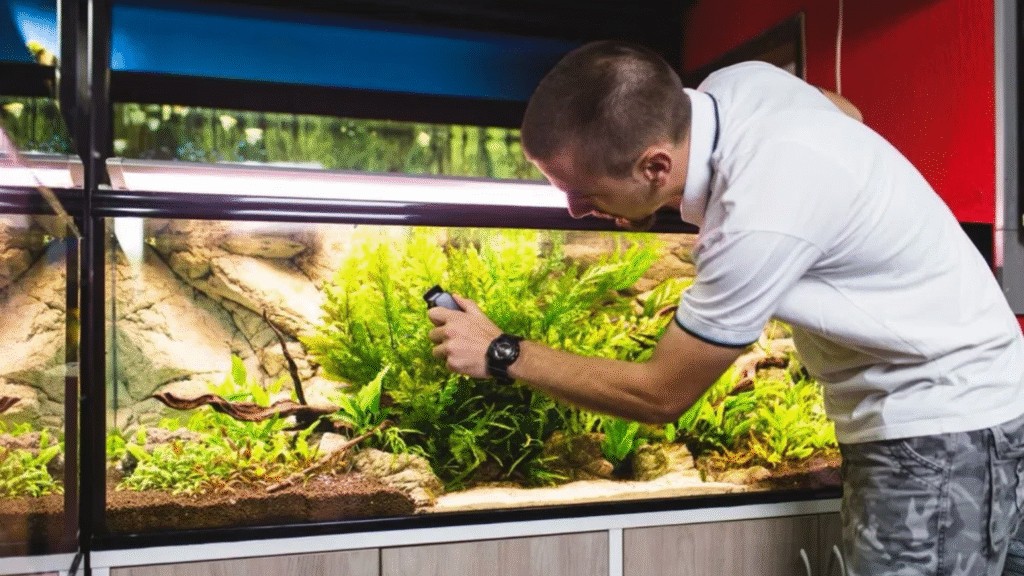
Plants planted live form a natural ecosystem although they require care. Pull on the gravel softly not to disturb roots. Fertilizer and CO2 equipment are frequently maintained to promote the wellbeing of the plants.
Small Tanks (Under 10 Gallons)
Smaller tanks are easily contaminated as they have less water to dilute the wastes. Changes of water can be performed two times a week. Stress is avoided by careful cleaning of water parameters.
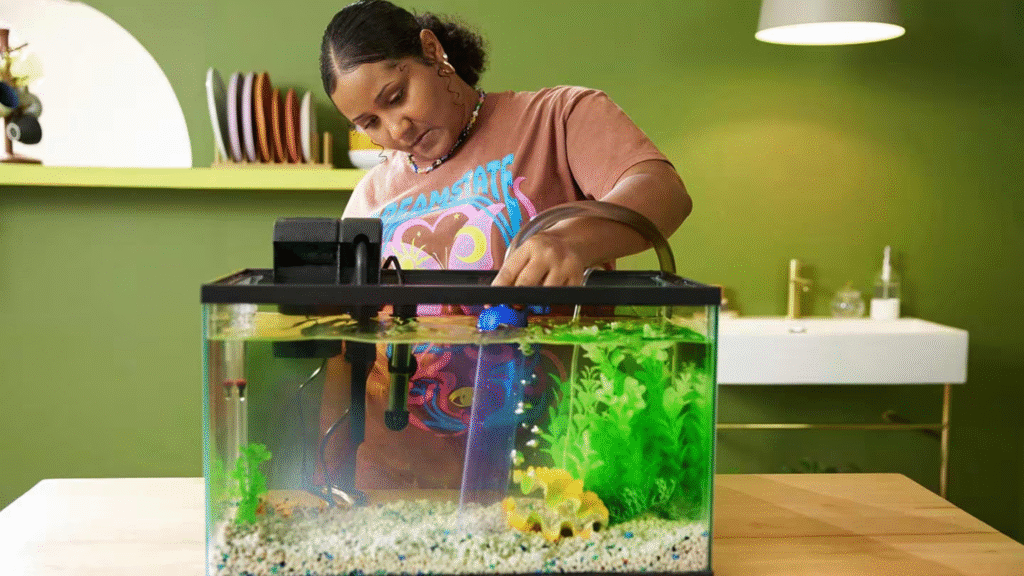
Deep Cleaning (Once Yearly)
Only in case of necessity, deep cleaning should be done. Medical issues like an epidemic or neglect in the long-term can mandate a total reset. The majority of tanks remain stable only during half cleans.
Temporary Fish Housing
Take fish into a bucket containing tank water. Add oxygen to the process by use of an air stone.
Complete Breakdown Steps
Take off the decorations, empty the water and wipe the surfaces only with warm water. Do not use hard chemicals, which kill fish.
Re-Cycling the Tank
Restart the process of nitrogen by filling the tank up again. Bacteria that are beneficial are added to accelerate cycling.
Deep clean is time-consuming and assists in the restoration of tanks with a severe imbalance. After restoring, resume normal, semi-cleanings so as to maintain a stable condition.
Product Recommendations (Neutral Overview)
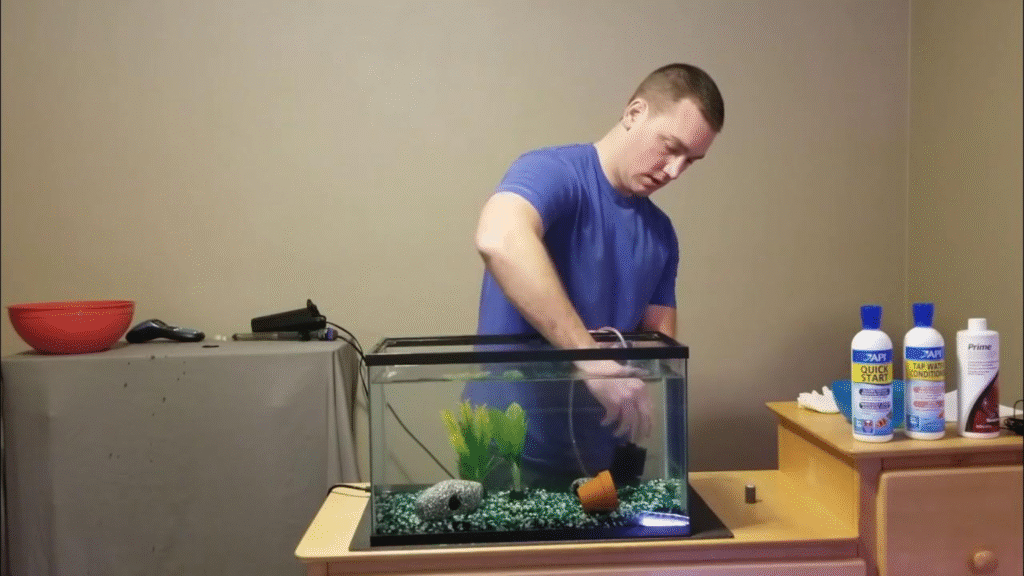
These are some of the most popular aquarium cleaning devices that are described in a neutral way. These alternatives are also available among hobbyists and are applicable over a broad spectrum of tanks.
| Product | Type | Pros | Cons | Price Range |
| Python No-Spill System | Gravel vacuum | Easy water changes, long hose | Higher cost | $40–$80 |
| Fluval Algae Scraper | Algae scraper | Strong magnetic grip | May scratch acrylic | $15–$30 |
| Aqueon Water Conditioner | Conditioner | Works instantly | Larger tanks require more product | $8–$20 |
| API Master Test Kit | Water test kit | Accurate testing | Requires manual handling | $25–$40 |
| Seachem Prime | Conditioner | Concentrated formula | Strong smell | $10–$18 |
| Marina Fish Net | Net | Gentle on fins | Not ideal for very large fish | $5–$12 |
| Fluval Filter Media | Filter media | Preserves bacteria | Needs periodic replacement | $8–$25 |
| Mag-Float Cleaner | Magnetic scrubber | Easy daily algae control | Doesn’t remove tough algae | $10–$25 |
Frequently Asked Questions
How often should I clean my fish tank?
The majority of tanks require cleaning on 1-2-week intervals. The less filled tanks can last longer but small tanks or crowded tanks can require more frequent attention. Frequent testing will be used to determine the best fish tank cleaning schedule.
Do I need to remove fish when cleaning?
No, fish may remain in the tank when partial water changes take place. Unless necessary, the removal of fish causes stress. Relocate them only on conditions of strenuous cleaning or severe health complications.
Why is my tank getting dirty so fast?
Rapid accumulation is usually as a result of overfeeding, small tank size or insufficient filtration. Measuring water levels also contributes to pointing out issues in cycling. Modify feeding and maintenance so as to reduce build-up.
Can I clean my tank with vinegar?
Vinegar can be used in cleaning an exterior or empty tank. Should not be placed in the tank with plants or fish. Wipe and dry and add more.
How to clean a fish tank without killing good bacteria?
Hot water or soap should not be used on any equipment. Strain filter material Researcher in large tank water and never filter all at once. Partial cleaning helps to keep beneficent bacteria alive.