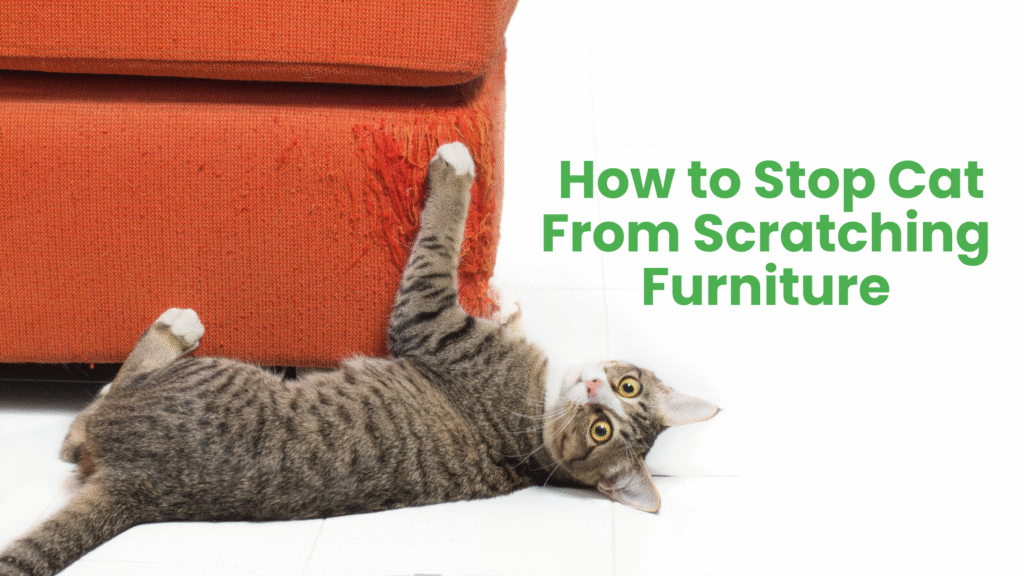
You can learn how to stop cat from scratching furniture, provide sturdy scratching posts, use safe cat scratching deterrent sprays, apply double-sided tape to problem areas, trim nails regularly, and reward correct scratching behavior. Cats scratch naturally, so success comes from redirection—not punishment. Declawing should never be used because it causes pain, long-term damage, and behavior problems.
Why Cats Scratch (It’s Natural)
Why Cats Scratch (It’s Natural)
Scratching is a normal action of cats in order to communicate and keep them physically healthy. When cat scratching furniture happens, it is usually because the surface allows them to leave visual marks and release scent signals that help define territory.
Clawing is also important to maintain claws and aid in day-to-day activities. It also loosens the muscles of the shoulders and back, also it discharges the accumulated energy, and it also makes the cats overcome stress or excitement. You cannot stop this instinct, but you can stop cat scratching furniture by redirecting the behavior to better surfaces.
Cats scratch to:
- Mark territory using scent and visible marks
- Remove old layers from claws
- Stretch muscles and joints
- Express emotions like excitement or tension
- Relieve stress and feel secure
11 Proven Methods to Redirect Scratching
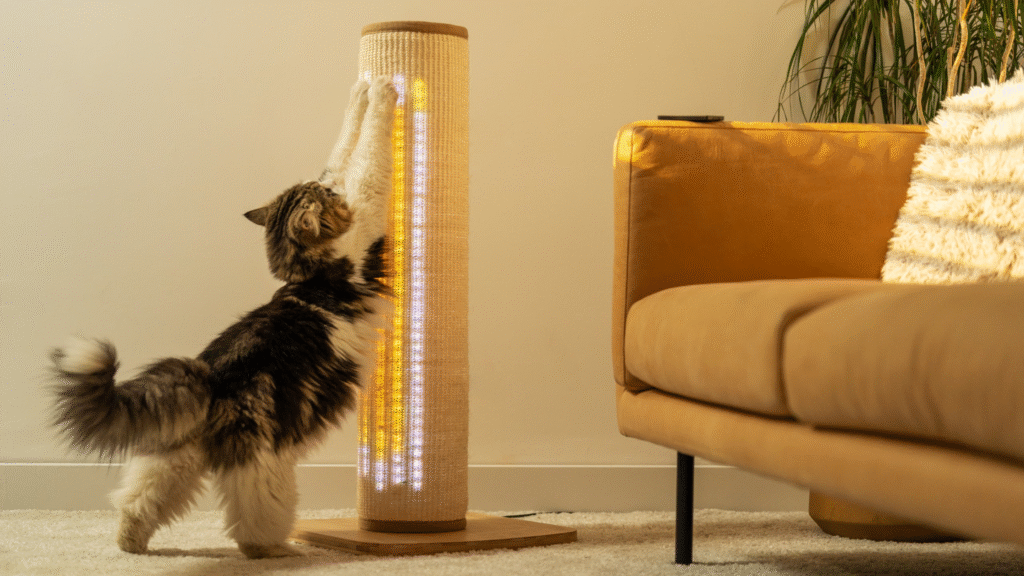
The most effective way to how to stop cat from scratching furniture is to give your cat better, more rewarding options. When the other surfaces address your cat with their instinctive requirements in terms of texture, height, and stability, it is best to redirect scratching.
1. Provide Multiple Scratching Posts
The majority of the cats will not use a scratching post that is not in the right location or is uncomfortable. To reduce cat scratching furniture, place scratching posts directly next to the furniture your cat already targets. Cats go back to the same places, therefore, changing the place, not to move it, will help in dismantling the habit.
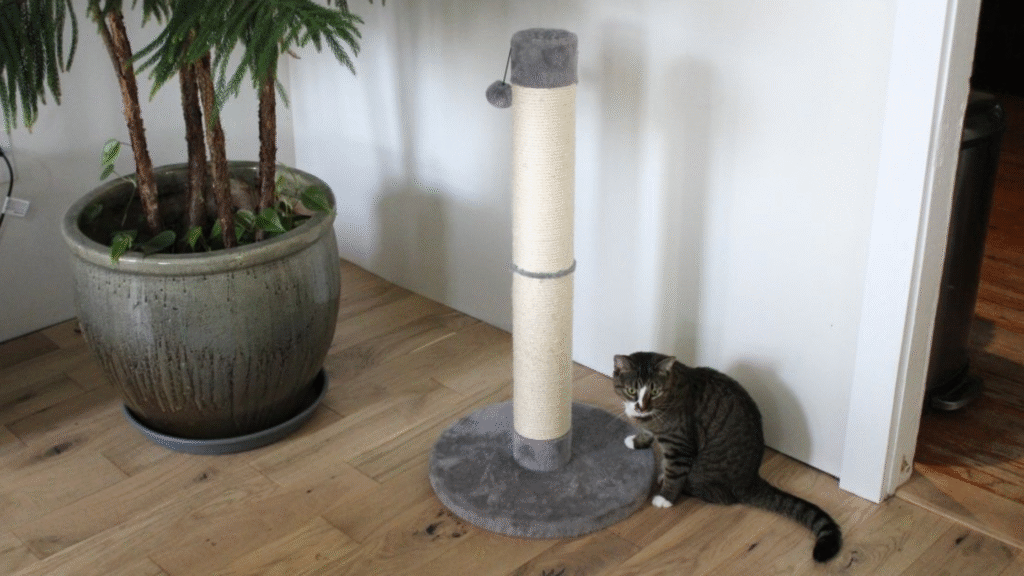
Provide a range of materials including sisal ropes, carpet and cardboard to suit various tastes. There are cats that like vertical posts and those that like the horizontal scratchers. To have quite a full stretch–at least 30 inches–powerful posts must also be tall yet steady so they will not slop. The post seems to be safe, and this makes it very more desirable than furniture.
Under these circumstances, most cats will scratch posts when provided with them as opposed to couches, chairs, and carpets.
2. Make Furniture Unappealing
One effective way to reduce cat scratching furniture is to make the surface less attractive while offering better alternatives nearby. This solution is ideal as a transitional training remedy and not a long-term permanent solution.
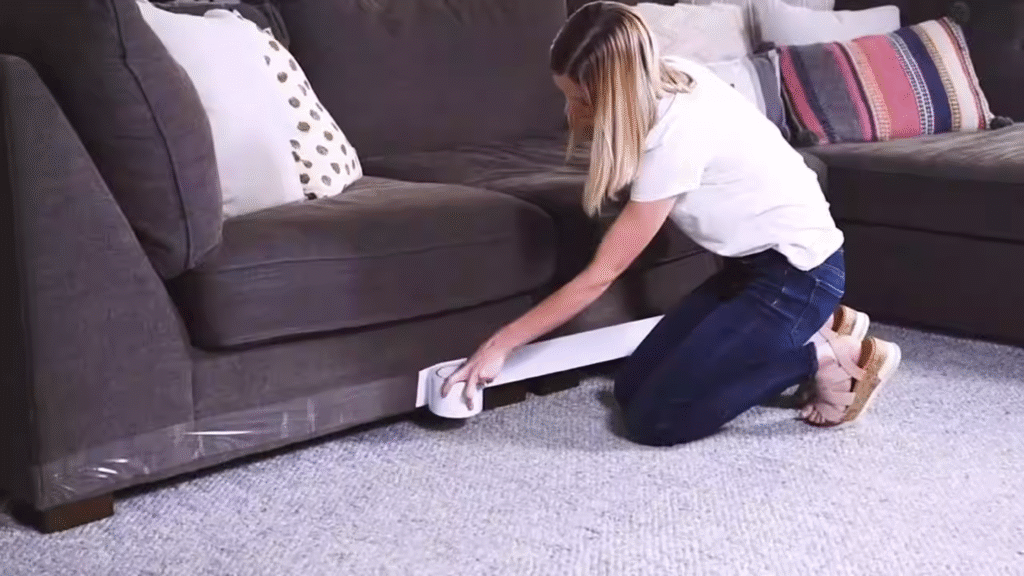
Double-sided tape is one of the simplest solutions. Cats do not like sticky textures on their paws, they do not prefer games of being scratched again and again, that is why the use of tapes will not be tolerated in such situations. Let it stay two to four weeks until your cat has become accustomed to scratching posts.
Aluminum foil can also be used short-term. The sound and texture are very irritating to most cats making the furniture less appealing. This is effective on armrests and corners.
Plastic nail caps, like Soft Paws, are over the tips of the nails and they protect the nails over four to six weeks. They neither spare themselves during training, but they keep furniture safe during the training process.
Furniture covers or slipcovers are used to cover fabric in the in-between time. They are simple to get rid of when scratching becomes better and they come in handy particularly in households with more than one cat.
3. Use Cat Scratching Deterrent Sprays
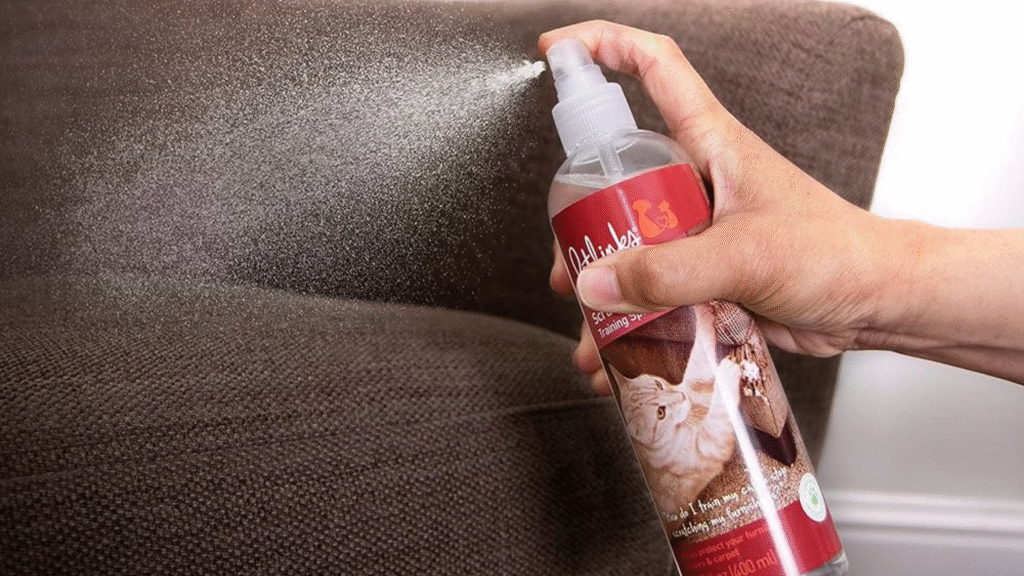
A safe cat scratching deterrent spray can help redirect scratching behavior away from furniture. Select products that are specifically made targeting cats to avoid the harmful chemicals.
Most cats do not like the smell of citrus therefore light citrus fashioned sprays tend mostly to be successful. Use the spray every day during the initial week, with creating emphasis on problem areas. I would always leave a scratching post with your cat so that he/she has an option that is clear and acceptable.
4. Trim Nails Regularly (Every 2–3 Weeks)
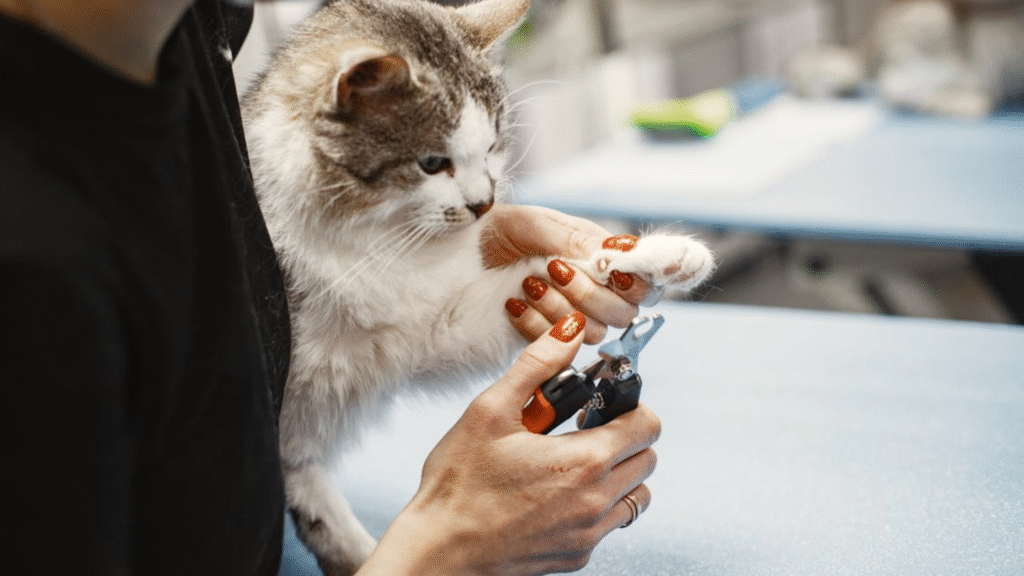
Having nails clipped minimises the destruction of furniture by the cats who scratch. Nail clipping also helps in ensuring that nails do not snag into clothes and carpets.
Gently and firmly hold your cat and support the chest and paws. The only thing that should be trimmed is the sharp end of each nail but not the quick which is the pink blood vessel inside. Giving a reward after every paw will make your cat relate trimming to pleasant things.
5. Use Positive Reinforcement
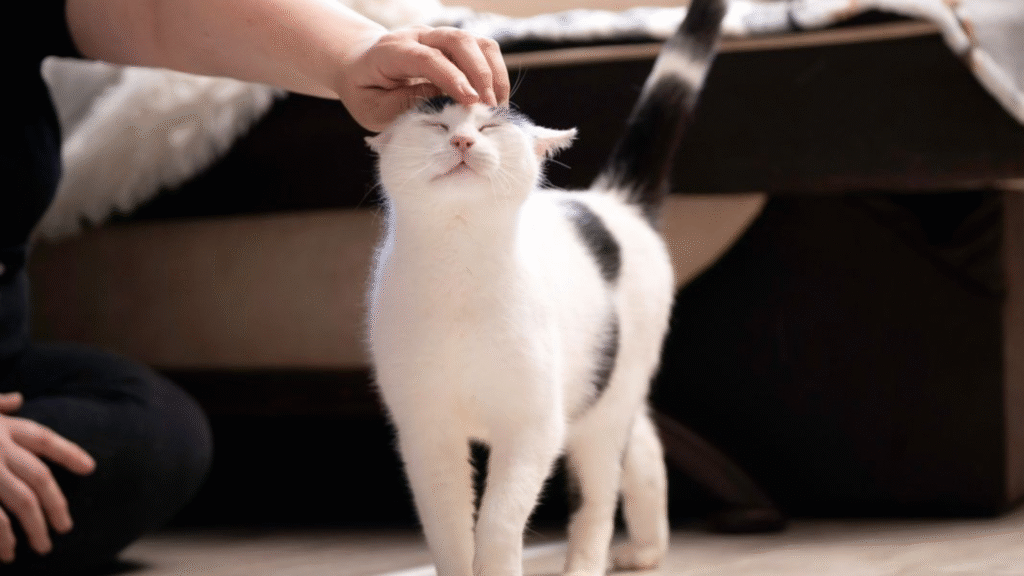
Positive reinforcement is one of the most reliable ways to how to stop cat from scratching furniture long-term. Whenever your cat is sitting at a scratching post, enjoy the action with a treat or praise or petting.
Silver vine or catnip may help to instigate more interest in scratching posts. It is also good to play near posts so your cat can be trained to correlate the release of energy with its good places to scratch.
6. Place Scratching Posts Strategically
Scratching posts are to be housed in places where scratching occurs and not compelled them away. It is much more likely that posts wedged beside damaged furniture will be used.
The best places are places close to where the cats sleep as they stretch upon waking up, and even crowded places that the cats are found. Areas such as window are also popular. In bigger houses it is advisable to have at least one post per room to avoid competition and misunderstanding.
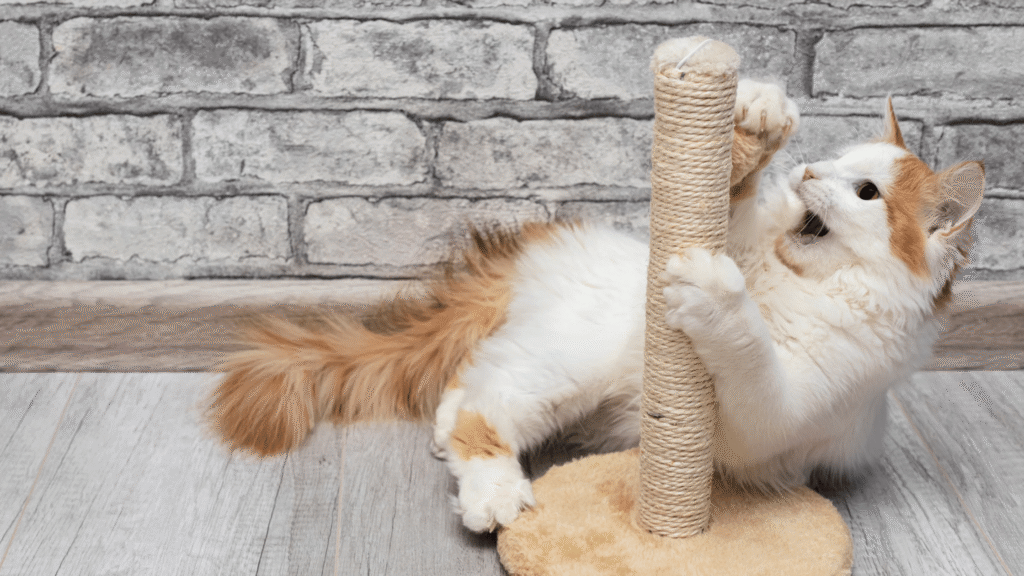
7. Choose Scratching Post Features Cats Prefer
Success is hugely dependent on the design of a scratching post. The most preferable material that is used is the sisal rope which gives resistance and resorts to shreds in a fulfilling manner.
Whenever possible, posts are supposed to provide both vertical and horizontal posts. The weaving is more tedious and more worthwhile. It should be stable – the weight of posts must not be less than 15 pounds or they should be attached to the wall to avoid wobbling. The height must be able to stretch to full body.
8. Redirect Scratching in the Moment
If you catch your cat scratching furniture, stay calm. Aggression and punishment will only accelerate stress and in most cases escalate scratching.
Instead, you should tenderly head to a scratching post with your cat. Reward your cat as soon as he lays paws on the post. Continuous redirection develops new habits.
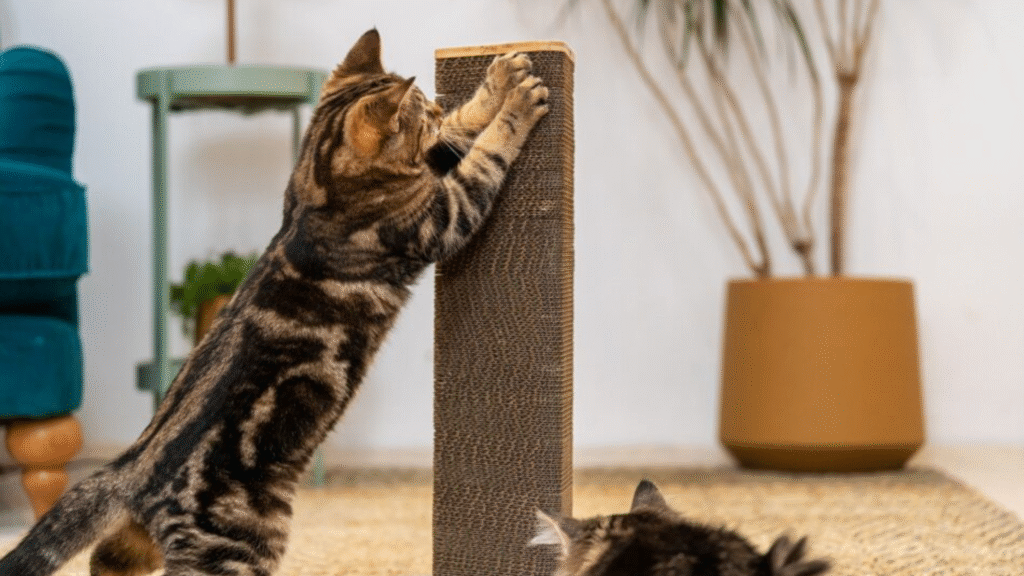
9. Use Pheromone Diffusers
Stress scratching may be treated with pheromone diffusers like Feliway. These products produce relaxing signals that resemble natural cat markups.
Install plug diffusers around areas of problems or rooms where the children most frequently scratch. The results are most probably displayed within a period of one to two weeks and are most effective along with a change in the environment.
10. Increase Environmental Enrichment
Excessive scratching is usually caused by boredom. Unstimulated cats also use furniture as a scratcher.
Offer interactive toys, climbing trees, window perches and puzzle feeders. Goal: two play sessions lasting approximately 15 minutes daily. Scratching actions associated with stress are decreased with mental and physical stimulation..
11. Provide Enough Posts for Multiple Cats
Territory management incorporates scratching in multi-cat households. Inadequate supply of posts may result in the competition and ensuing destruction of furniture.
One per scratching post is a good rule and one over. About them, put them in different places so that each cat can feel safe in his own space.
What NOT to Do
A few reactions cause scratching behavior to become more severe, or the relationship between you and your cat to become ruined.
Never Declaw
Declawing removes the final bone on each foot. It causes chronic pain and a change in walking, as well as behavioral problems in the long run. A good number of states have prohibited the practice due to the following factors.
Declawed cats develop fears, biting and litter box issues. Training is the human option of redirection.
Avoid These Mistakes
• Never hit or spray with water
• Never yell or chase your cat
• Never remove all scratching options
• Never expect instant results
Scratching habits take time to shift. Most cats respond within two to four weeks with consistent redirection.
Scratching Post Recommendations
Here are reliable options selected for durability, stability, and cat preference.
| Product | Type | Notes |
| SmartCat Ultimate Scratching Post | Tall sisal post | Sturdy, 32-inch height |
| Frisco 33-Inch Sisal Post | Budget-friendly | Great for full stretch |
| PetFusion 3-Sided Scratcher | Multi-angle cardboard | Good for horizontal scratchers |
| Catit V-Perch Scratcher | Wall-mounted | Ideal for small spaces |
| FEANDREA Cat Tree | Multi-level | Good for active cats |
These support different scratching styles and household needs.
DIY Scratching Post
Building a DIY scratching post is a simple and budget-friendly way to how to stop cat from scratching furniture while giving your cat a surface they enjoy using. Homemade posts are good since adjustment can be made in the height, texture, and stability.
Materials Needed
- Wooden base
- 2×4 or similarly sturdy post
- Sisal rope
- Screws
- Non-toxic glue
How to Build It
Screw post to the wooden base to ensure that it does not tip over. Stability is of paramount importance because cats do not scratch in posts that move.
Add glue between wraps, and sisal rope around the post, making it as tight as possible. Paint the whole post all over evenly, and Congratulations! inflict further pain on paws by sanding them off.
Tape felt pads to help prevent floors in the base. People who make DIY posts opt to paint them, add platforms to them, or get them raised to suit their houses more.
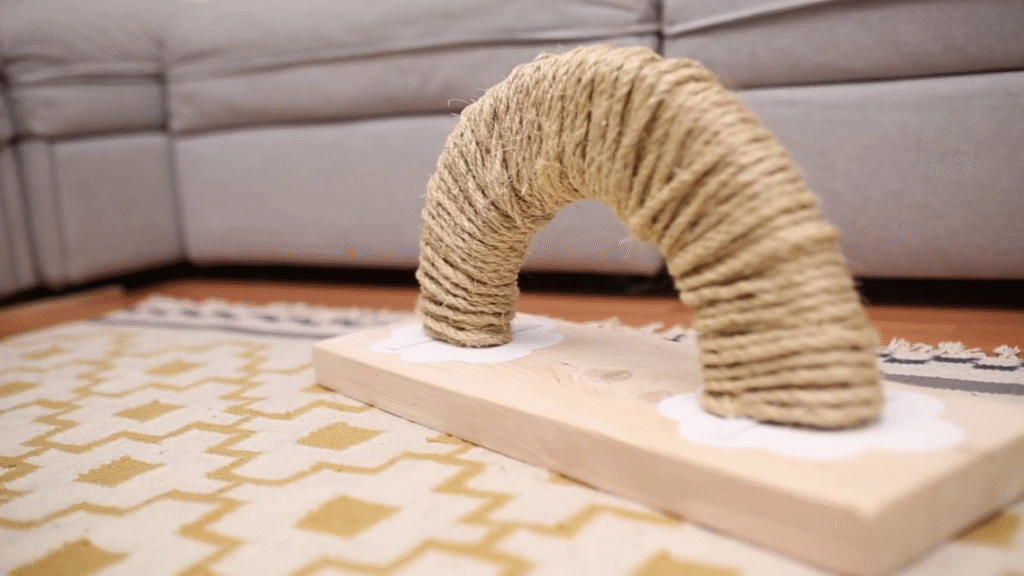
Understanding Different Scratching Styles
Scratching varies in cats according to the comfort, body configuration, and habit. Matching scratching post style to your cat’s natural behavior greatly improves success and reduces cat scratching furniture.
Vertical Scratchers
Scratchers that cats scratch chair legs, door frames or the sides of the sofa should have vertical scratchers. These posts must be high, strong and capable of full extension of the body without shaking.
Horizontal Scratchers
Horizontal scratchers are usually the favorite of cats that attack the rugs, carpets, or mattresses. The cardboard or carpet scratchers are also quite satisfactory as the floor and around sectors where flooring is a problem.
Multi-Style Scratchers
The majority of cats like scratching vertically and horizontally. Providing a mix of styles keeps enrichment high, meets physical needs, and makes it easier to how to stop cat from scratching furniture consistently.
When Scratching Is Excessive
While scratching is normal, sudden or extreme increases in cat scratching furniture can signal an underlying problem. Un groomed nail overgrowth can result in the generation of pressure which then causes scratching to be uncomfortable- this can lead to increased scratching frequency or intensity.
Scratching may also alter posture due to joint pain caused by arthritis and cats will find soft or lower surfaces, such as couches and carpets, to scratch. Destructive scratching is common as a coping behavior that is often intensified by anxiety, stress or alterations in the home environment.
A veterinarian must investigate your cat and eliminate medical or psychologically related factors in case the habit of scratching is sudden or aggravates the situation even with training.
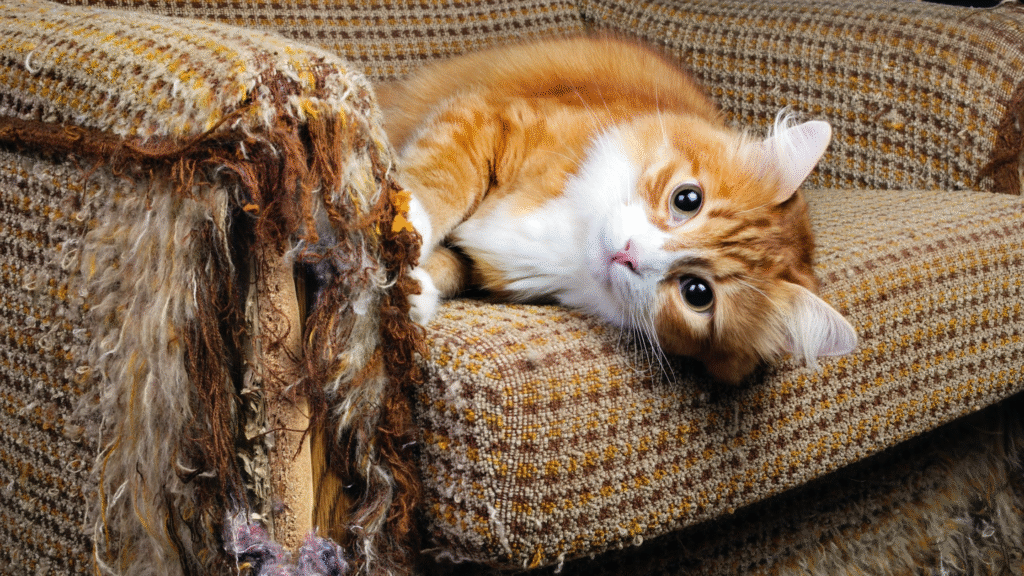
Success Timeline
Unwanted scratching is a habit that can only be eliminated with patience. Behavior change is not achieved immediately.
Week 1-2: Add scratching posts, wrap up targeted furniture and initiate regular redirection. Your cat begins to experiment on new surfaces.
Week 2-4: New habits are developed. Use of scratching posts increases, and cat scratching furniture typically decreases.
Month 2 and later: The majority of cats have acquired a consistent habit of using the post regularly and causing minimal destruction to furniture.
All cats study at varying levels. The most important factor towards success in the long term is continuity in terms of placement, rewards, and redirection.
Conclusion
Scratching is a natural behavior, but with the right approach, you can successfully how to stop cat from scratching furniture without stress or punishment. Understanding why cat scratching furniture happens allows you to redirect the behavior using scratching posts, deterrents, and positive reinforcement.
When done consistently, these methods help stop cat scratching while supporting your cat’s physical and emotional needs. One should be patient as any habit does not change immediately. With humane practices and unhealthy behaviors you prevent damage to your furniture but create a healthier relationship with your cat, you alleviate stress, and gain more money.
Frequently Asked Questions
Why does my cat scratch furniture after I pet them?
The cats may scratch furniture to dispose of excitement or slight overstimulation of petting. It assists them in moving out of socialization to independence. This habit is healthy and may be diverted with scratching posts around.
Can I train an adult cat not to scratch furniture?
Yes. Adult cats can learn to stop cat scratching furniture with consistent redirection, rewards, and proper scratching post placement. Although the adults might take a little more time as compared to the kittens, majority of them respond positively to positive reinforcement.
What’s the best scratching post material?
Sisal rope and sisal fabric are the most efficient materials since they give resistance cats love. Cardboard works well for horizontal scratchers and helps redirect cat scratching furniture away from rugs and carpets.
How do I stop my cat scratching at night?
Enhance interactive games during the evening to vent unwanted energy. Place scratching posts near nighttime problem areas and provide enrichment like window perches to reduce boredom-driven cat scratching furniture.
Is it okay to trim cat claws?
Yes. Regular nail trimming helps prevent damage from cat scratching furniture and keeps claws healthy. Clip off the sharp end only, but not the fast one and reward your cat so that you can give him or her a good experience.