
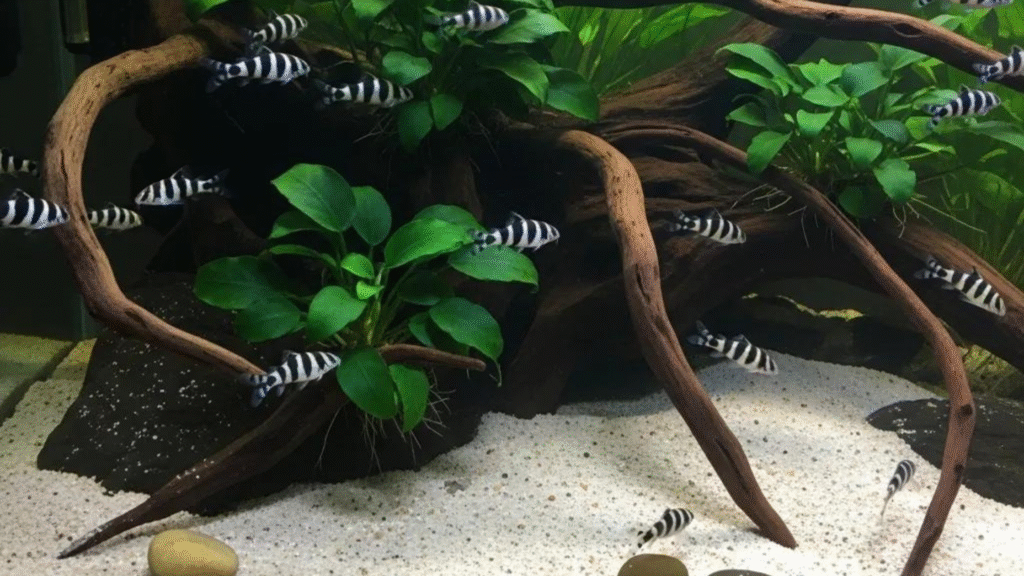
Zebra Loach (Botia striata) is a small, striped freshwater aquarium loach prized for its lively schooling behavior and bottom-dwelling utility. This guide shows how to set up a proper zebra loach tank, feed and observe healthy behavior, manage water chemistry to prevent common diseases such as Ich, and select compatible tank mates for a stress-free group.
Many hobbyists struggle with barbel damage, inappropriate substrates, and medication sensitivities; following practical setup, feeding, and disease-response steps will reduce stress and extend lifespan. The article covers essential tank requirements, diet and snail-control realities, compatibility and behavior, and water parameter maintenance with treatment cautions. Throughout, you’ll find quick-reference tables, equipment and feeding lists, and stepwise disease-response guidance tailored to Botia striata and related bottom-dwellers.
What Are the Essential Zebra Loach Tank Requirements?
Zebra loaches are freshwater bottom-dwellers that prefer well-oxygenated tanks with soft, smooth substrate and plentiful hiding spots; this environment protects delicate barbels and encourages natural foraging. Because they are social, a proper tank emphasizes both open swimming areas and refuges formed by driftwood, caves, and leaf litter to mimic clear mountain streams of the Western Ghats. Stable filtration and moderate flow help maintain oxygenation and reduce waste buildup, which lowers disease risk.
Below is a quick facts table to compare minimum requirements for common stocking scenarios and target parameters for Botia striata.
| Tank feature | Recommended value | Notes |
| Minimum tank size | 30 gallons (group of 4–6) | More space reduces stress and aggression |
| Group size | 5–6 individuals | Social schooling reduces hiding and lethargy |
| Substrate | Fine sand or very smooth gravel | Protects barbels (sensory organs) from abrasion |
| Temperature | 73–79°F (23–26°C) | Stable temperature reduces stress |
| pH | 6.5–7.5 | Slightly acidic to neutral suits natural habitat |
| Hardness | 5–12 dGH | Moderate softness to medium hardness |
| Lifespan | 8–10 years (captive-bred) | Depends on care and genetics |
This table summarizes the core environment needs for zebra loaches and highlights why each attribute matters for healthy behavior and disease resistance. Next, we’ll look at practical setup details for substrate, hiding places, and lighting.
What Is the Ideal Tank Size and Substrate for Zebra Loaches?
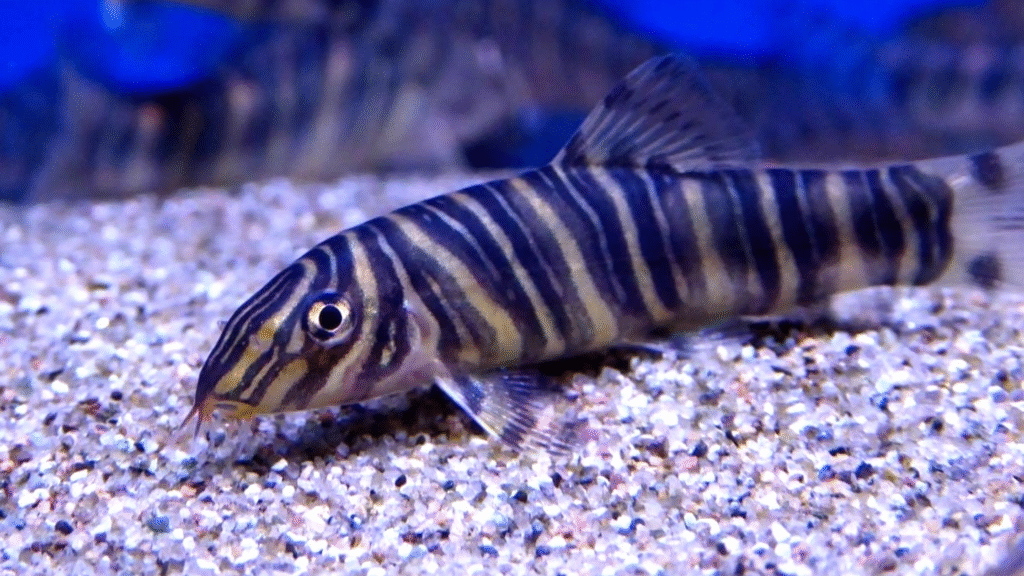
The ideal tank size supports both social schooling and territorial spacing; for a small group of 5–6 zebra loaches, 30–40 gallons is a practical minimum that balances maintenance and natural behavior. Sand or very smooth fine gravel protects barbels, which zebra loaches constantly probe into substrate; sharp or coarse gravel causes injury and secondary infections.
Include several hiding sites spaced throughout the tank so subordinate fish can retreat without being trapped by dominants, and leave open mid-level lanes for active swimming. Proper substrate choice directly reduces mechanical injury and the stress that predisposes loaches to diseases like Ich.
How Should You Decorate and Light a Zebra Loach Aquarium?
Decoration should prioritize refuge and naturalism: driftwood, rock caves with smooth edges, leaf litter, and low-profile hiding spots recreate the shaded streambeds loaches prefer. Choose hardy, low-light plants such as Anubias and Java fern attached to hardscape, since loaches may uproot delicate rooted plants while foraging. Use subdued to moderate lighting and create shaded zones to reflect the dappled light of mountain streams; overly bright lights increase stress and daytime hiding. Proper decor encourages natural foraging and social interactions while reducing aggression and stress-related disease susceptibility.
How Do You Manage Zebra Loach Diet and Feeding for Optimal Health?
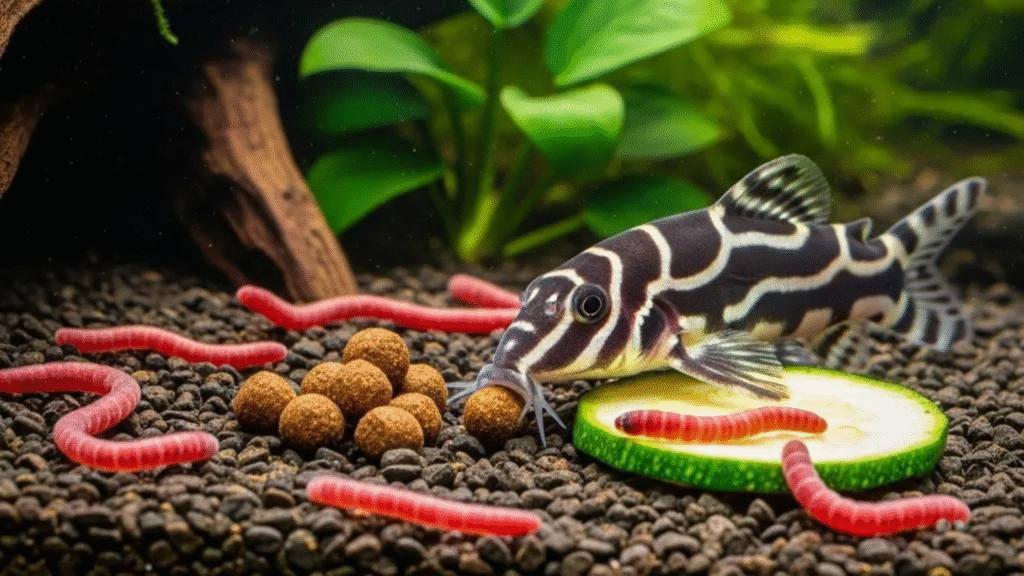
Zebra loaches are omnivores that benefit from a staple of sinking pellets or wafers supplemented with meaty frozen foods and plant matter; this varied diet supports body condition, barbel health, and digestive balance. They are most active at dawn and dusk, so feeding once or twice daily with small portions helps prevent competition and ensures bottom-feeders receive food. Use multiple feeding spots and sinking formats so loaches can access food without competing with midwater species.
Below is a short feeding guide and practical list of suitable foods.
Zebra loach feeding essentials:
- Sinking pellets/wafers: Staple base that reaches bottom-dwelling loaches.
- Frozen meaty foods: Bloodworms and brine shrimp for protein and enrichment.
- Vegetable matter: Blanched zucchini or cucumber pieces for fiber and variety.
- Occasional live foods: To stimulate natural foraging (ensure quarantine).
Feed small amounts that loaches consume within a few minutes; monitor body condition and adjust frequency. A balanced feeding routine prevents obesity and reduces scavenging on unintended targets like valuable snails.
What Foods Are Best for Zebra Loaches and How Often Should You Feed Them?
Best foods include high-quality sinking pellets or bottom-wafers as a daily staple, with frozen bloodworms or brine shrimp offered several times weekly to provide protein variety. Supplementing with blanched vegetables once or twice weekly adds fiber and supports digestive health.
Feed in small portions 1–2 times per day, ensuring food reaches the substrate to prevent midwater feeders monopolizing rations. Rotating food types maintains interest and nutritional balance while reducing reliance on any single source.
Zebra Loach Feeding Regimes and Maturation Dynamics in Captivity
Botia striata(Rao, 1920) is high valued ornamental fish, endemic to the Western ghats of India. This fish requires standardized maturation diet following a feeding regime for it to breed in captivity. Therefore, a study was conducted over a period of 90 days, employed a 2 × 3 factorial design involving six different feeding regimes: T1 (formulated feed, twice daily), T2 (formulated feed, four times daily), T3 (frozen tubifex, twice daily), T4 (frozen tubifex, four times daily), T5 (mixed diet, twice daily), and T6 (mixed diet, four times daily).
The provision of selected feeding regimes for 90 days assisted with sand substratum induced the gonadal maturation in the treated fishes (n = 360) and allowed to achieve best final maturation with the success rate of 95% in the T2 experimental group and a lower success rate of 65% in the mixed diet group.
Parameters such as hepato-somatic index, gonado-somatic index, histology, and reproductive hormones (11-ketotestosterone, 17β-estradiol, follicle-stimulating hormone (FSH), leutinizing hormone (LH), low-density lipoprotein (LDL), and high-density lipoprotein (HDL)) were analyzed to evaluate male and female gonadal maturation. The relative fecundity of the experimental fishes was studied and correlated with the findings of the experiment. The fish in the T2 had relative fecundity of 247 ± 8.00 no’s compared to other treatments.
The findings suggest that formulated feed administered four times daily significantly enhanced gonad weight, oocyte number and diameter, addressing the challenges faced in captive breeding of the zebra loach. This study provides valuable insights for optimizing captive maturation and breeding conditions for highly demanded indigenous ornamental fish facilitating its development on a commercial scale.
Effects of feeding regimes on maturation dynamics in zebra loach, Botia striata (Rao, 1920) under captivity, S Guntapalli, 1920
Research indicates that specific feeding frequencies and types of food can significantly impact the maturation and breeding success of zebra loaches in captivity.
How Effective Are Zebra Loaches at Controlling Pest Snails?
Zebra loaches may eat small pest snails and can reduce juvenile snail numbers, but they rarely eliminate an established infestation of larger or prolific species. Predation effectiveness depends on loach numbers, alternative food availability, and snail species; loaches prefer small, soft-shelled snails and may ignore larger, heavily armored types.
For serious snail problems, combine biological predation with manual removal, traps, and careful quarantine of new plants. Expect loaches to contribute as part of an integrated pest-control plan rather than a standalone solution.
Which Zebra Loach Tank Mates Are Compatible and What Is Their Behavior?
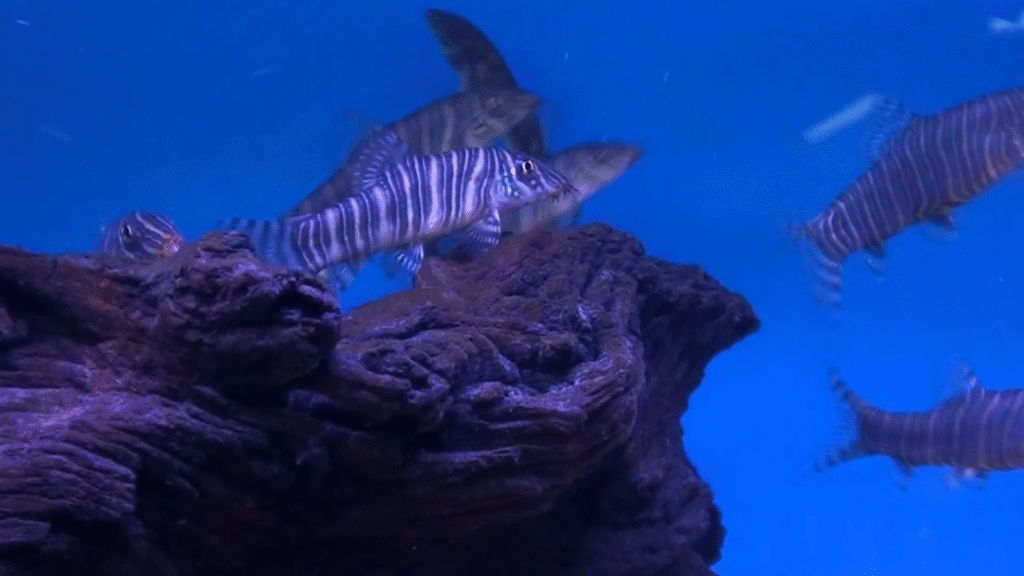
Zebra loaches are peaceful, active bottom-dwellers that display more natural behavior when kept in groups; schooling promotes foraging, reduces stress, and lowers incidence of hiding and lethargy. Their temperament suits community tanks with peaceful mid- and top-level schooling fish that share similar water parameters. Avoid large aggressive species and known fin-nippers, which can stress loaches and damage barbels. The compatibility matrix below helps scan common choices quickly.
| Tank Mate | Compatibility (Yes/No) | Notes (size, temperament, risk) |
| Tetras (small) | Yes | Peaceful schooling top/mid swimmers |
| Rasboras | Yes | Good water parameter overlap |
| Danios | Yes | Active but generally non-aggressive |
| Peaceful gouramis | Yes | Match temperament if size-compatible |
| Large cichlids | No | Aggressive and territorial risk |
| Fin-nippers (some barbs) | No | High risk of barb and fin damage |
| Corydoras (small bottom-dwellers) | Caution | May compete for the same microhabitat |
This table clarifies why size, temperament, and niche overlap determine compatibility and helps avoid common stocking mistakes. Maintaining semantic clarity between behavior, niche, and risk ensures better group dynamics.
What Is the Temperament of Zebra Loaches and Why Keep Them in Groups?
Zebra loaches show clear social behavior: in groups they forage openly, display mutual grooming, and establish non-lethal hierarchies that reduce chronic stress. Kept alone, loaches often hide excessively, become lethargic, or show reduced foraging—signs that precede health decline and increased disease susceptibility. A minimum group of five to six encourages natural activity and reduces the chance of one fish being bullied. Group dynamics also facilitate natural behaviors useful for breeding attempts and social enrichment.
Which Fish Species Are Best and Worst Tank Mates for Zebra Loaches?
Best mates are peaceful schooling species like tetras, rasboras, and small danios that occupy higher water columns and won’t compete aggressively for bottom food. Worst mates include large cichlids, aggressive predators, and fin-nippers that can stress loaches and damage barbels. Size-matching and water-parameter overlap are essential: choose species that tolerate 73–79°F and pH 6.5–7.5 to avoid chronic stress. Thoughtful stocking reduces aggression and promotes long-term health.
How Do You Maintain Optimal Zebra Loach Water Parameters and Prevent Diseases?
Maintaining stable temperature, pH, and hardness with regular water changes and robust filtration is the primary defense against disease; zebra loaches are particularly vulnerable to stress-induced illnesses such as Ich (Ichthyophthirius multifiliis). Quarantine new fish and plants, use a hospital tank for sick individuals, and avoid harsh medications that loaches tolerate poorly. The parameter table below gives ideal ranges and the reasons they matter for physiology and disease resistance.
| Parameter | Ideal Range | Why it matters |
| Temperature | 73–79°F (23–26°C) | Supports metabolism and immune function |
| pH | 6.5–7.5 | Stability reduces physiological stress |
| Hardness | 5–12 dGH | Prevents osmotic shock and barbel issues |
| Water change frequency | 20–30% weekly | Removes nitrates and pathogens |
| Filtration | Moderate flow, high biological capacity | Maintains oxygen and waste processing |
Stable parameters prevent immune suppression and lower Ich risk; prompt quarantine and improved water quality are first-line responses to any disease signs.
What Are the Ideal Temperature, pH, and Hardness Levels for Zebra Loaches?
Zebra loaches prefer 73–79°F (23–26°C), pH 6.5–7.5, and moderate softness to medium hardness (roughly 5–12 dGH); deviations cause stress and impair immunity. Stable conditions and gradual adjustments reduce barbel irritation and secondary infections. Many problems stem from abrupt swings rather than slight, steady differences; aim for consistent maintenance routines to preserve homeostasis. Proper parameter control supports feeding, reproduction attempts, and disease resistance.
How Can You Identify, Prevent, and Treat Common Zebra Loach Diseases Like Ich?
Identify Ich by small white spots, flashing/scratching against decor, rapid breathing, and lethargy; respond immediately by improving water quality and isolating affected fish. Prevention includes strict quarantine of new additions, maintaining high oxygenation and low nitrate levels, and minimizing stress through proper hiding places and social groups. Treatment should use a hospital tank and medications known to be safe for loaches—avoid copper-based treatments without veterinary guidance and monitor barbels closely. Early detection plus rapid quarantine and gentle, loach-safe interventions deliver the best outcomes.
Conclusion
Providing optimal care for zebra loaches ensures a vibrant and healthy aquarium environment, enhancing their natural behaviors and longevity. By understanding their specific tank requirements, dietary needs, and compatibility with other species, you can create a thriving community that minimizes stress and disease. Regular maintenance and attention to water parameters are crucial for their well-being, allowing you to enjoy their lively presence for years to come. Discover more expert tips and resources to elevate your aquarium experience today.
Frequently Asked Questions
What are the signs of stress in zebra loaches?
Stress in zebra loaches can manifest through various behaviors and physical signs. Common indicators include excessive hiding, lethargy, reduced foraging, and erratic swimming patterns. You may also notice them scratching against tank decor, which can indicate irritation or discomfort. Additionally, changes in appetite, such as refusing food, can signal stress. Maintaining stable water parameters and providing adequate hiding spots can help mitigate stress and promote a healthier environment for your loaches.
How can I encourage breeding in zebra loaches?
To encourage breeding in zebra loaches, create optimal conditions that mimic their natural habitat. This includes maintaining stable water parameters, particularly temperature and pH, and providing a varied diet rich in protein. Additionally, ensure the tank has plenty of hiding spots and flat surfaces for egg laying. A separate breeding tank can also be beneficial, as it allows for better control of conditions and reduces stress from other tank mates. Regular water changes and gentle filtration will further support breeding success.
Can zebra loaches live with shrimp or snails?
Zebra loaches can coexist with shrimp and snails, but caution is advised. While they may not actively hunt larger shrimp, they can pose a threat to smaller or juvenile shrimp, especially if food is scarce. As for snails, zebra loaches may help control small pest snail populations but are not a reliable solution for larger infestations. It’s essential to monitor interactions and ensure that all species have enough space and resources to thrive without undue stress.
What should I do if my zebra loach is showing signs of illness?
If your zebra loach shows signs of illness, such as lethargy, loss of appetite, or visible spots, immediate action is crucial. First, isolate the affected fish in a hospital tank to prevent the spread of disease. Assess water parameters and perform a partial water change to improve quality. Observe the fish closely for specific symptoms, which can help determine the appropriate treatment. Avoid using harsh medications without consulting a specialist, as zebra loaches can be sensitive to certain treatments.
How often should I perform water changes for my zebra loach tank?
For a zebra loach tank, it’s recommended to perform water changes of 20-30% weekly. Regular water changes help maintain stable water parameters, remove harmful toxins, and reduce the buildup of nitrates and other waste products. Consistency is key; establishing a routine will help keep the environment healthy for your loaches. Additionally, always ensure that the new water is treated to remove chlorine and is at a similar temperature to the tank to avoid shocking the fish.
What are the best plants to include in a zebra loach aquarium?
When selecting plants for a zebra loach aquarium, opt for hardy, low-light varieties that can withstand the loaches’ foraging behavior. Suitable options include Anubias, Java fern, and mosses, which can be attached to rocks or driftwood. These plants provide hiding spots and contribute to the natural aesthetic of the tank. Avoid delicate rooted plants, as zebra loaches may uproot them while searching for food. Incorporating plants enhances the environment and promotes the overall well-being of your loaches.