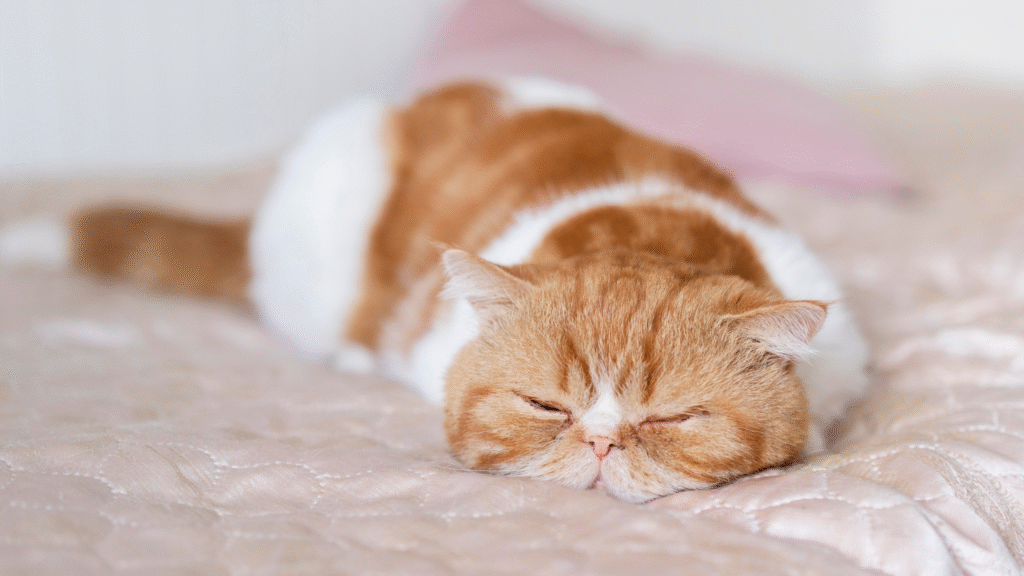
Your cat is not being cute, they are communicating to you the significant information about their emotional state, level of comfort, and even their health. Cats sleep 12-16 hours per day, and the sleeping position discloses the meanings of cat sleeping positions vets are using in diagnosing cats. Loafing position arthritis presents with stiffness of the joint, and the superman stretch pain presents with pain. Curled tight cold is an indication of temperature stress and belly up trust level indicates the level of security. These are trends that forecast problems in advance. According to veterinarians, alterations in sleeping posture preclude 70 % of observable health issues. Tracking positions measure aging, stress and pain development.
- 1. The Curled Up Position (The Donut)
- 2. The Loaf Position (Cat Loafing)
- 3. Belly Up Position (Ultimate Trust)
- 4. The Superman Stretch (Sploot Position)
- 5. Side Sleeping Position
- 6. Sleeping on Your Chest
- 7. Sleeping on Your Feet
- 8. Sleeping by Your Head
- 9. Paws Covering Face
- 10. Contorted or Twisted Position
- When Cat Sleeping Positions Signal Health Problems
- How Temperature and Environment Affect Cat Sleeping Positions
- Understanding Your Cat's Sleep Language
- Final Thoughts
- Frequently Asked Questions About Cat Sleeping Positions
- References
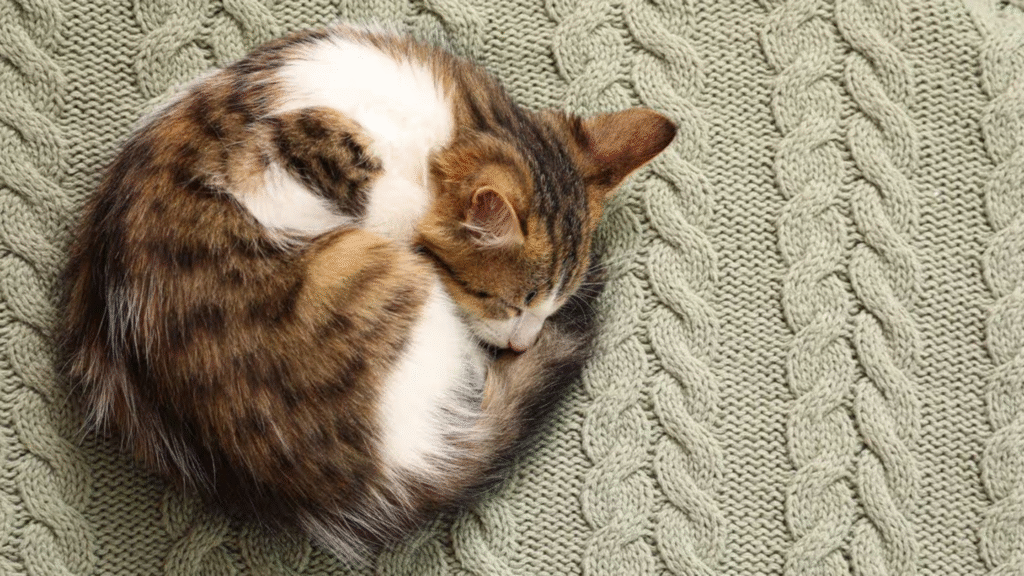
1. The Curled Up Position (The Donut)
The cat wraps into a tight ball with their nose pressed close to their tail and this forms a circular shape similar to a donut or cinnamon roll.
What It Means:
It is among the most instinctive and most common cat sleeping postures. When curled tight, your cat is:
- Conserving body heat: It is a position that reduces the area of exposure, which warms cats in cold conditions.
- Protecting vital organs: one can say that cats guard their vulnerable belly and inner organs against possible danger.
- Seeking security: This defensive pose would indicate that your cat is not too nervous but still relaxed enough to sleep.
- Health Note: In a warm environment, it is possible that your cat is snug because of sickness or maybe because they want to have an extra level of comfort in stress situations.
2. The Loaf Position (Cat Loafing)
Your cat is on the bench with all their paws tucked under their body just like it was a loaf of bread. They have their head straight and their tail is most often wrapped around their body.
What It Means:
The loafing stance reveals that your cat is:
- Comfortable but alert: They are not so nervous as to take the risk of falling asleep, although they can move into action at any moment.
- Conserving heat: Rolling paws inwards is used to maintain body warmth.
- Taking a light nap This is commonly associated with short naps, but not sleep.
⚠️ Warning Sign – The Meatloaf Position and Arthritis:
Although ordinary loafing is not harmful, there is an alarming variation known as the “meatloaf” or “face loaf” posture in which:
- The head of the cat is either down or where the cat is resting.
- The back is hunched
- The body appears tense
- Their cat sits on the toes.
This is a hunched loaf posture, which may be a sign of pain in limbs due to arthritis, ingrown nails, injuries, or abdominal pain because of diseases such as chronic kidney disease or liver disease. In case your cat suddenly alters his/her loafing behavior or always sits in that cowered posture, visit your vet.
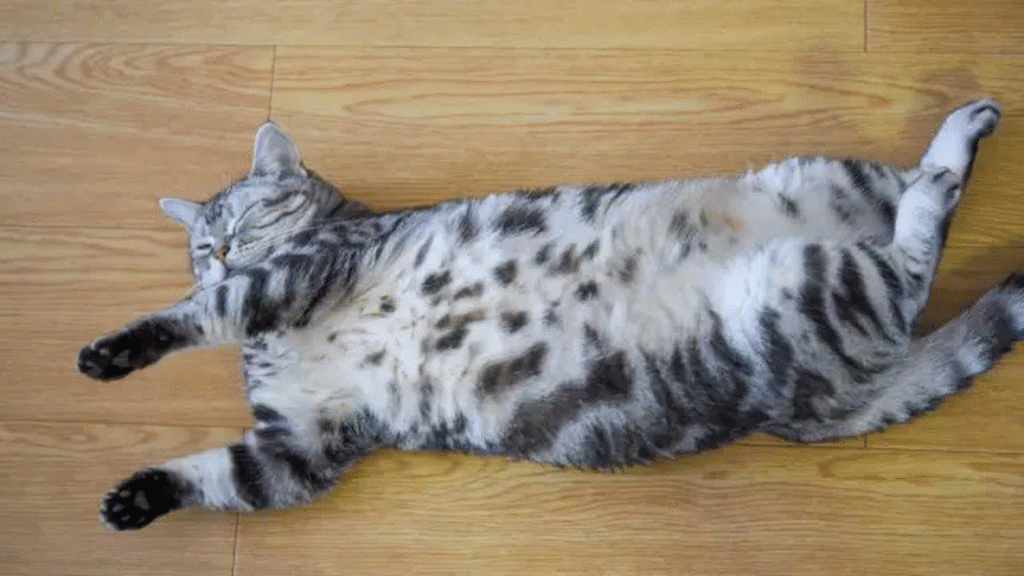
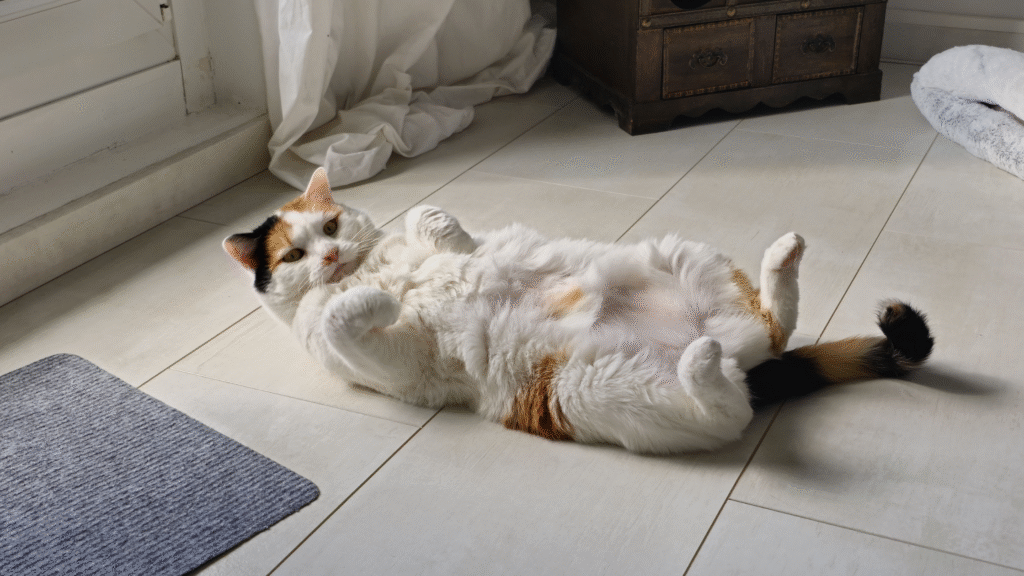
3. Belly Up Position (Ultimate Trust)
The cat has his back on the ground, his belly open, and his legs fairly relaxed, even stretched along the sides.
What It Means:
This is the final measure of confidence and assurance. When your cat sleeps with the belly-up, he/she is telling you:
- Total trust level: The stomach is the most vulnerable part of cats which has a set of essential organs. By revealing it they feel absolutely secure.
- Deep relaxation: In this position, the cats cannot escape quickly and consequently, they only use it when they are fully relaxed.
- Temperature regulation: On hot days, it is possible to cool down exposing the belly.
Health Add: Belly-up posture is an indicator of zero threat levels in your home environment. Outdoor cats will hardly sleep in such a way because they can be attacked by predators.
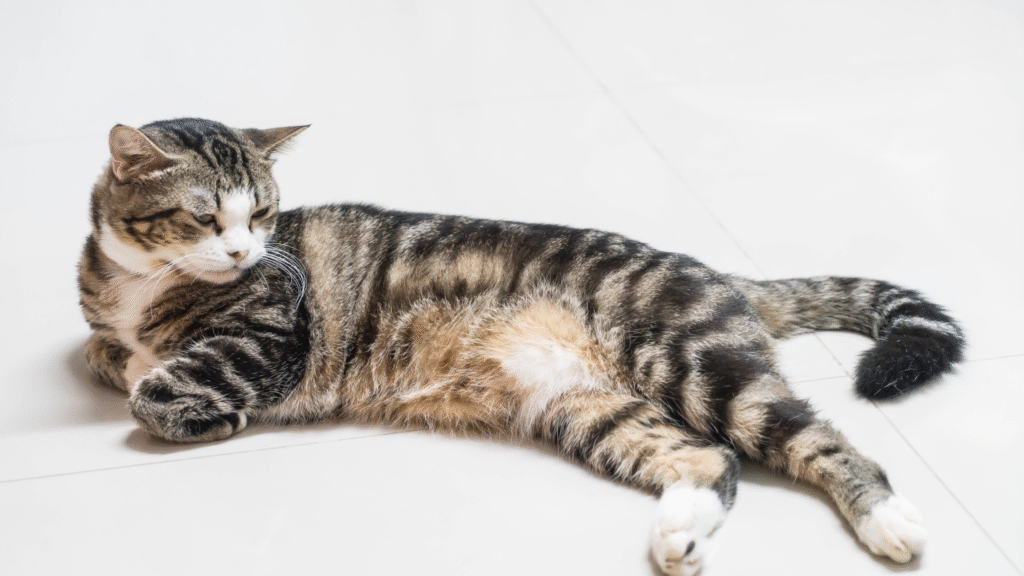
4. The Superman Stretch (Sploot Position)
Your cat is on the floor with all the four legs straight out in front of it, two legs in front and two legs behind, like Superman flying.
What It Means:
A stretch of the superman implies:
- Cooling down: This stance makes the maximum contact of the belly surface with the cool floors or surfaces in order to adjust the body temperature.
- Complete trust:The belly-up pose, just like the belly-in position, reveals a cat that is feeling secure since you displayed the milky stomach.
- Deep relaxation: The completely extended limbs are the most comfortable and flexible.
⚠️ Pain Consideration:
Although the superman stretch is otherwise a comforting position, continual stretching and other signs such as lethargy, difficulty moving, or vocalization may be an indication of pain or stiffness. In case your cat appears to be in pain as he or she stretches or does it too much, visit your vet.
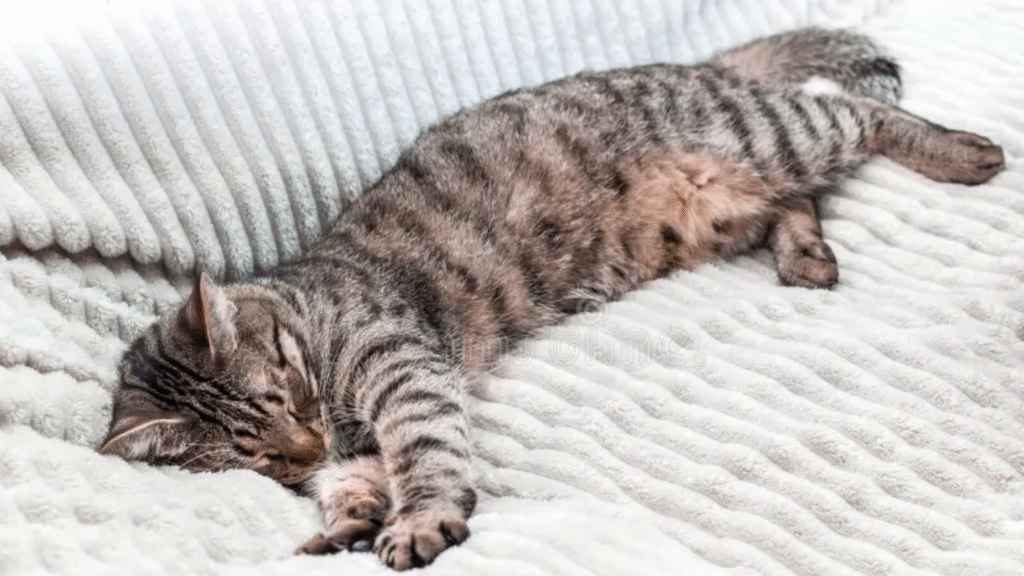
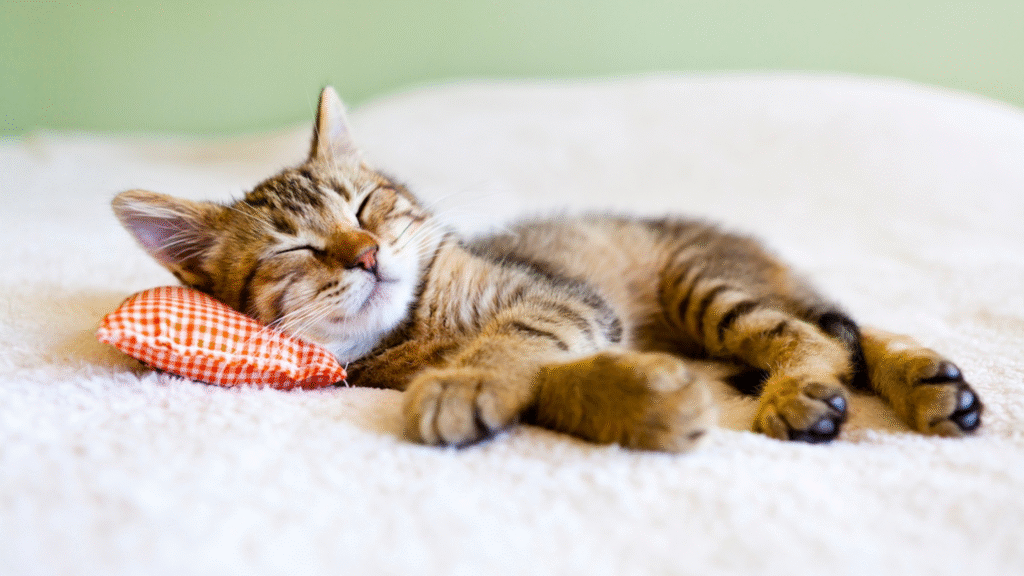
5. Side Sleeping Position
Your cat is lying on his side with his legs spread wide open with his belly half uncovered.
What It Means:
Side sleeping is a wonderful sign that your cat:
Sleeping on its side An excellent omen that your cat:
- Feels safe: This defenseless stance demonstrates that they believe in their surroundings.
- In deep sleep: Cats frequently go into the REM (dream/sleep) in this pose.
- Comfortable: This is among the most comfortable postures of sleeping.
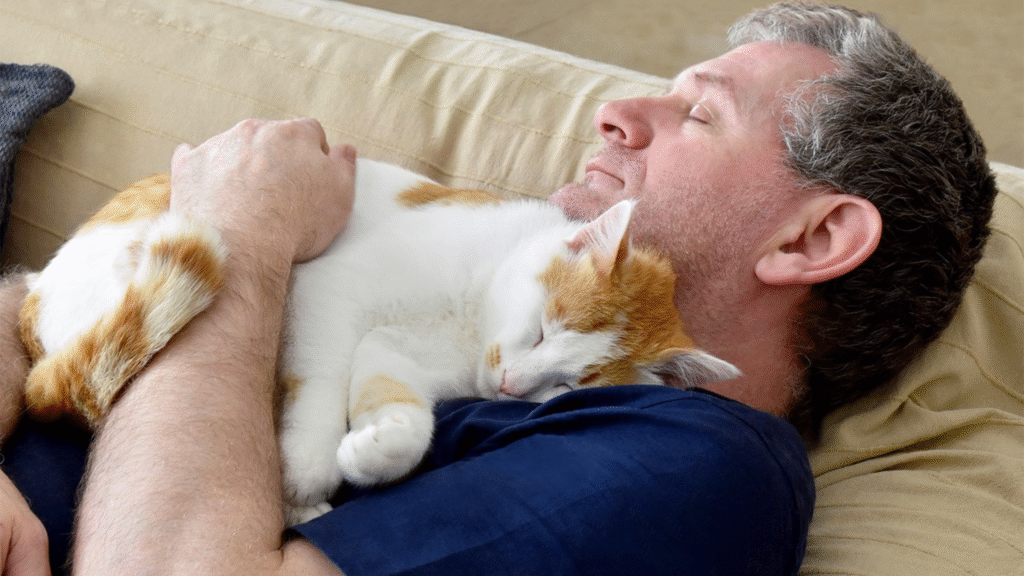
6. Sleeping on Your Chest
Your cat lies or sits squarely on your chest usually close to your face.
What It Means:
This is the final expression of love and attachment:
- Full trust: Your cat considers you as an ultimate source of security.
- Parental relation: Chest sleeping implies that your cat perceives you to be a parent.
- Comfort seeking: The beating of your heart and breathing give such calming vibrations.
- Heat source: Your chest is warmer but you won’t get rolled over.
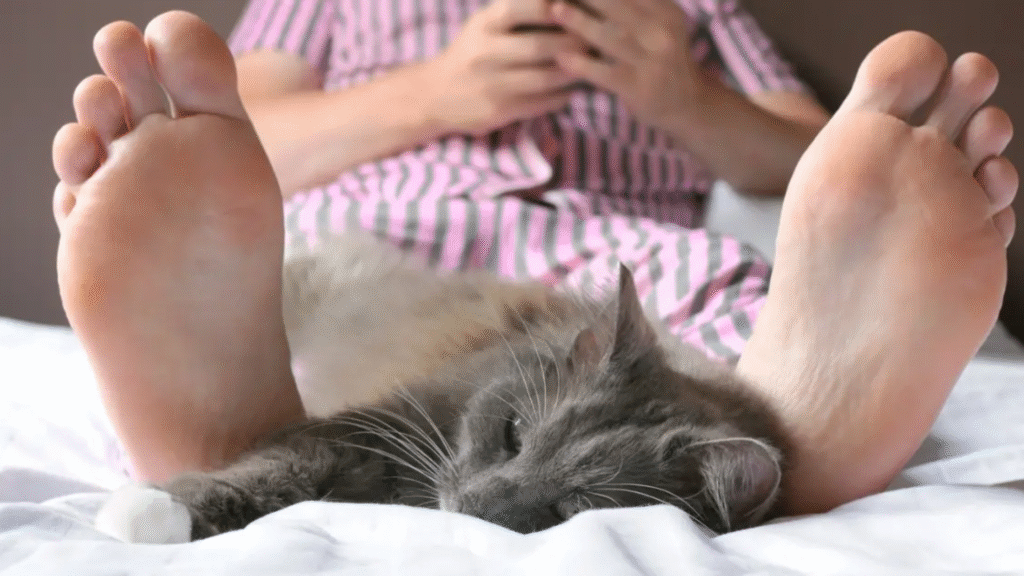
7. Sleeping on Your Feet
Your cat is at the foot of your bed, usually on or near your ankles or feet.
What It Means:
This stance is a compromise between love and self-reliance:
- Pack mentality: Your cat wants to close in with you.
- Quick escape route: The bed has the foot where one can have quick exits.
- Monitoring position: Cats are able to observe the door and be in physical contact with you.
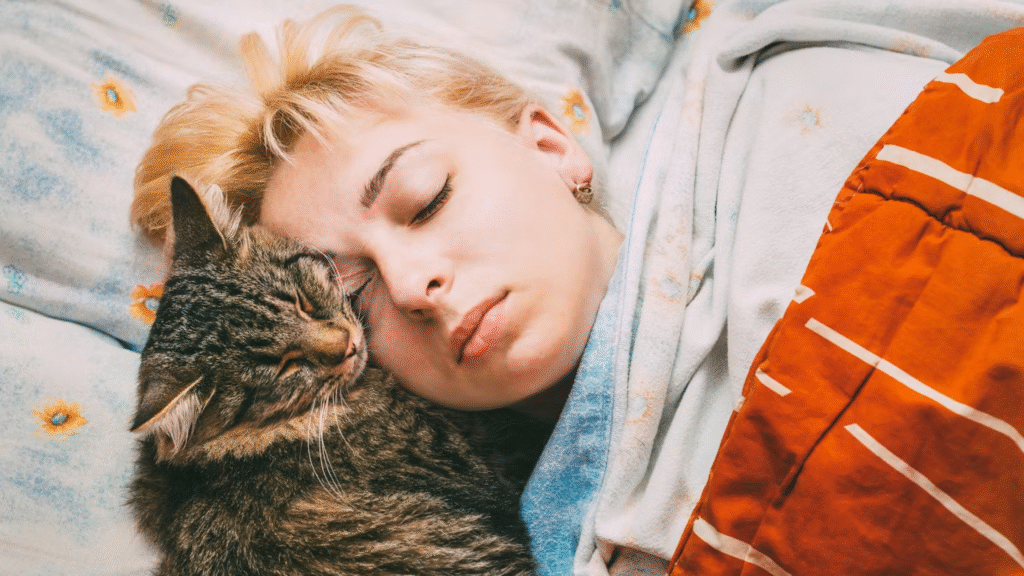
8. Sleeping by Your Head
Your cat is put around your head like a hat or rushes up against your pillow and snuggles itself up against your face.
What It Means:
The warmth-seeking behavior is the main force behind this position:
- Heat source: Uncovered head is also a common source of body heat which is not covered by blankets.
- Scent bonding: Your smell is best around your head, which gives you comfort.
- Movement safety: While they sleep with their head they cannot toss and turn their limbs.
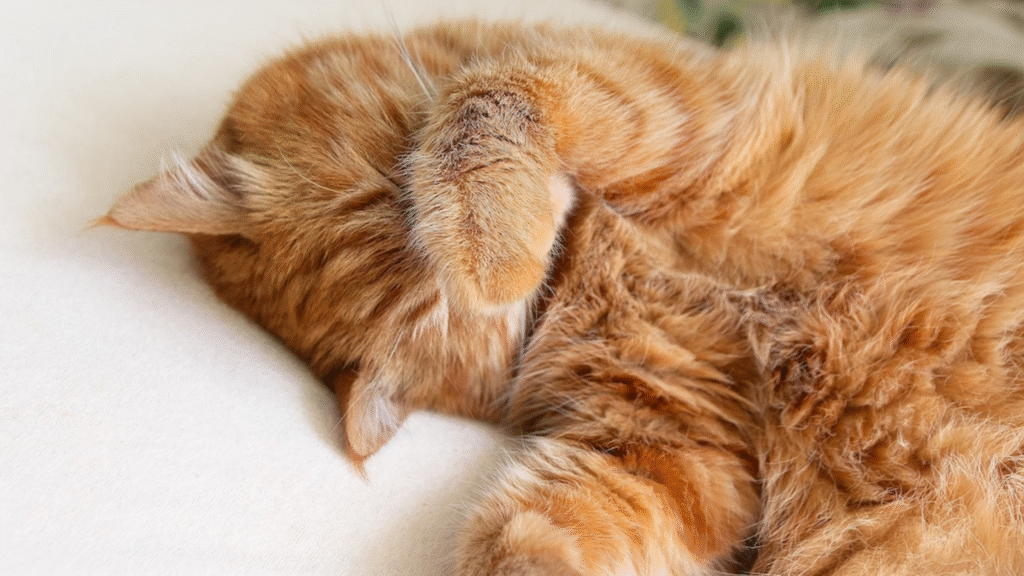
9. Paws Covering Face
Your cat sleeps with one or both their paws over their eyes or face.
What It Means:
It is a cute pose that signifies:
- Light blocking: Your cat is attempting to block the light so that he can sleep better.
- Self-comforting: The gesture is reassuring and reassuring.
- Need for undisturbed rest: According to this pose, your cat would like to have rest that is devoid of disturbance in a busy place.
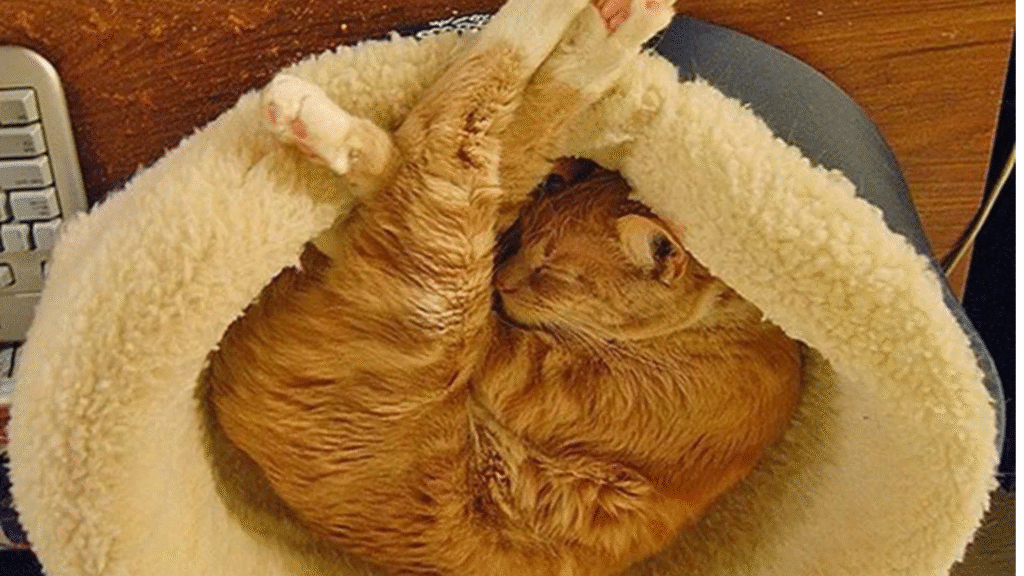
10. Contorted or Twisted Position
Your cat is contorted into seemingly uncomfortable poses with its limbs and its tail in strange positions.
What It Means:
And in the majority of cases, this simply implies:
- Deep REM sleep: Cats are highly amiable and can be seen to be out of their element during dreaming.
- Maximum relaxation: This is where their muscles are fully relaxed and they are allowed to assume unusual postures.
Health Tip: Although it is normal in cats anatomically, when combined with lethargy, difficult breathing, or lack of movement, then you need to seek advice with your veterinarian.
When Cat Sleeping Positions Signal Health Problems
Though the majority of sleeping postures are quite usual, some of the variations or combinations of behaviors are subject to a veterinary examination:
Red Flags to Watch For:
- Sudden position changes: Your cat no longer sleeps in positions that he used to love.
- Hunched loafing: Repeated position of the head down on the meatloaf can be the sign of arthritis or abdominal pain.
- Hiding while sleeping: It is noteworthy to seek strange or special places when sleeping.
- Staying curled tight in warm weather: It may symbolize the sickness of the cat.
- Sleeping in litter box: In many cases, it is a sign of urinary or digestive problems- call your veterinarian.
- Accompanied by other symptoms: Alterations in appetite, litter boxing, complaining, limping or lethargy.
- Head pressing: Fitting head on the walls and surfaces when sleeping can be a sign of neurological problems.
- Difficulty breathing: Wheezing, or prolonged inhalation of longer elbows when loafing can be signs of respiratory/heart problems.
How Temperature and Environment Affect Cat Sleeping Positions
Cats are very sensitive to the environment, and the sleeping position is greatly affected by the environmental conditions:
Cold Temperatures:
- Increased curled-up positions
- More frequent loafing
- Seeking warm surfaces like radiators, heating vents, or sunny spots
Warm Conditions:
- Preference for stretched-out positions (superman stretch)
- Belly-up sleeping
- Seeking cool surfaces like tile floors or bathtubs
Loud or Busy Environments:
- Greater tendency to hide in enclosed spaces
- More alert loafing position arthritis
- Paws covering face to block stimuli
Quiet, Secure Settings:
- More relaxed, exposed postures
- Belly-up sleeping
- Side sleeping
Understanding Your Cat’s Sleep Language
Your cat’s sleeping positions are a window into their emotional and physical well-being. From the defensive curled-up position to the trusting belly-up pose, each posture communicates something unique about how your cat is feeling.
By observing these sleep patterns regularly, you can:
- Gauge your cat’s trust level and bond with you
- Detect early signs of discomfort, arthritis, or illness
- Understand their temperature and comfort preferences
- Create a safer, more comfortable environment for them
It is important to keep in mind that loafing and curled-up sleep are the general norm, but when there are drastic changes, particularly when combined with additional symptoms, it is time to take a veterinary visit. The hunched meatloaf posture is also a possible sign of arthritis or pain and should be paid close attention to.
Whenever you happen to see your cat lying in a strange pose, you will be in a position to know what it is saying. They are either keeping warm, or proving their loyalty, or just helping to find the most comfortable place to sleep in the house, these cute sleeping habits are another act of our feline friends talking with us without words. Continue watching, watch and observe the changes and have the innumerable hours of entertainment by watching your cat learn to sleep.
Final Thoughts
Learning the sleeping patterns of your cat will make daily observations worth insight into your health. With an understanding of the common applications of these gestures, as signs of trust or indicators of pain, you become a better parent of cats. Keep observing, keep wondering and never be afraid to approach your veterinarian when things do not appear right. Your cat is relying on you to read their non-verbal words.
Frequently Asked Questions About Cat Sleeping Positions
Below are clear answers to the most common questions cat owners ask about cat sleeping positions and what they reveal about comfort, trust, and health.