- What Are the Ideal Habitat Requirements for Hermit Crabs?
- How Do You Maintain Proper Temperature and Humidity for Hermit Crabs?
- What Are the Essential Care Practices for Hermit Crab Environments?
- How Can You Monitor and Troubleshoot Common Hermit Crab Habitat Issues?
- Conclusion
- Frequently Asked Questions
Setting up a proper “crabitat” is the single most important factor in healthy hermit crab care because the enclosure determines humidity, temperature, molting success, and daily behavior. This guide explains how a correct hermit crab environment—tank size, substrate, water provisioning, temperature, and enrichment—works to support physiological needs like modified gill function and safe molting, and it outlines practical steps owners can apply immediately.
Many keepers struggle with failed molts, chronic low humidity, and shell shortages; these problems often trace back to substrate depth, unstable microclimates, or inadequate water options. Below you will find concise habitat requirements, clear temperature and humidity targets, essential daily and weekly care practices, and a stepwise troubleshooting section to diagnose and resolve common problems.
The article covers tank and substrate selection, heating and humidity control, freshwater and saltwater preparation, enrichment and shell provisioning, monitoring equipment, and precise owner actions for molting issues and environment failures. Throughout, targeted keywords like hermit crab environment, hermit crab substrate mix, and hermit crab humidity levels are used to help you set up and maintain a reliable crabitat.
What Are the Ideal Habitat Requirements for Hermit Crabs?
A healthy hermit crab environment balances space, substrate depth, water access, and safe decor to support molting and natural activity. Proper tank size preserves humidity and allows climbing and hiding, while substrate depth enables complete burrowing during premolt and postmolt recovery.
Providing both freshwater and saltwater dishes and multiple extra shells reduces stress, prevents shell fights, and supports modified gill moisture. Below is a quick-reference table mapping tank size to crab count and recommended substrate depth so you can match enclosure scale to your crab population. This table compares tank size, recommended number of crabs, and substrate depth for safe molting and comfort.
| Tank Size | Recommended For | Substrate Depth |
| 10–20 gallons | 1 small adult or juveniles | 6–8 inches |
| 20–40 gallons | 2–3 adults (small-medium) | 8–10 inches |
| 40+ gallons | 4+ adults or mixed sizes | 10+ inches |
This table highlights that deeper substrate and larger tanks scale together; choose the deepest substrate you can afford in a tank that retains humidity and allows decor placement.
Hermit crab essentials include substrate that retains moisture without compacting, ventilation that preserves humidity but prevents stagnation, and secure lids to prevent escapes. Below is a short checklist of must-have items to set up a functional crabitat quickly.
- Substrate mix: Moist, loose, and non-toxic to support burrowing.
- Water dishes: Separate shallow freshwater and saltwater pools.
- Hiding and climbing: Multiple shelters and vertical structures.
These items create a baseline habitat that supports molting, natural exploration, and stable microclimates; the next subsections explain tank sizing and substrate choices in detail.
What Tank Size and Type Best Suit Hermit Crab Habitats?
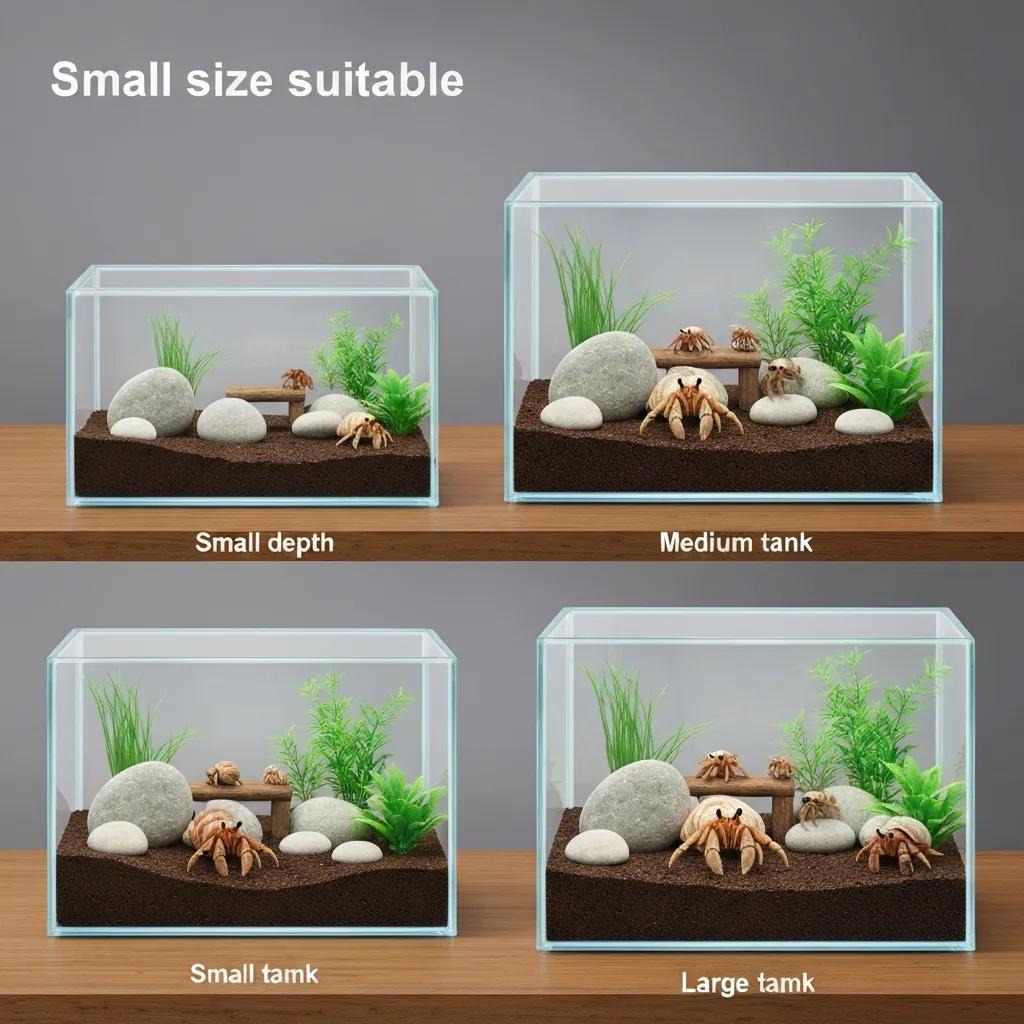
Tank size matters because it governs humidity retention and usable space for activity, climbing, and multiple hiding spots. A single small adult can live in a 10–20 gallon tank, but two to three adults need at least 20–40 gallons to prevent crowding and to keep substrate deep enough for molting.
Glass aquaria hold humidity well and allow stable temperature gradients, while high-quality plastic tanks reduce breakage risk; choose a tank with a secure, ventilated lid that limits airflow enough to retain humidity without trapping stale air. Place the tank away from direct sunlight and drafts to avoid temperature spikes and humidity loss. Proper placement supports consistent environmental control and reduces the need for constant adjustments.
Which Substrate Materials and Depths Support Healthy Hermit Crab Molting?
Substrate supports molting by allowing hermit crabs to dig complete burrows and remain undisturbed during ecdysis, protecting soft tissues and enabling proper humidity around the molting chamber. Use a blend of play sand and coconut fiber (coco coir) with crushed coral folded in for calcium buffering; a common mix is roughly 50% sand, 40% coco coir, and 10% crushed coral by volume.
The depth rule of thumb is roughly three times the height of the largest crab, with a practical minimum of 6 inches for small adults and 10+ inches for larger species like Coenobita clypeatus. Keep substrate moist but not waterlogged to maintain gill function and prevent compaction that blocks burrowing; aerate and fluff substrate during spot cleaning to avoid hard layers that hinder digging.
How Do You Maintain Proper Temperature and Humidity for Hermit Crabs?
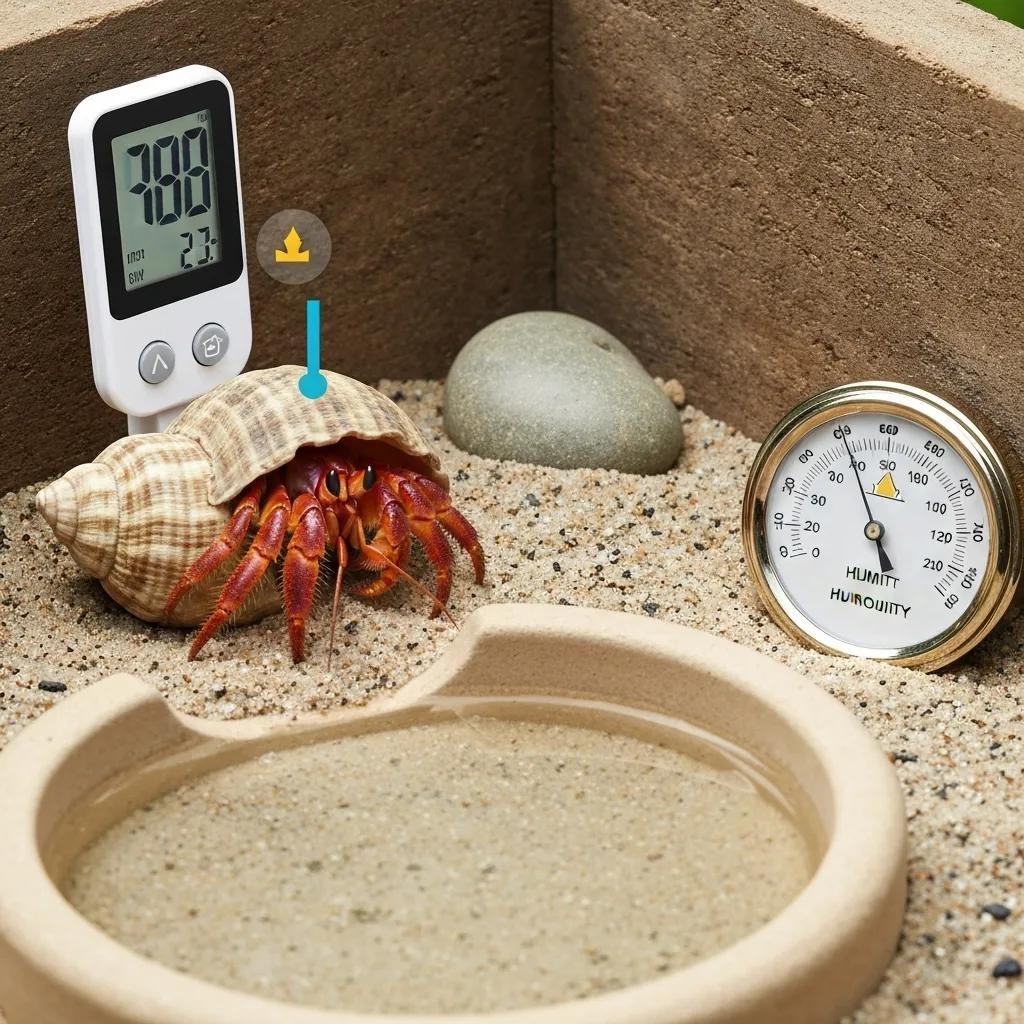
Temperature and humidity directly affect hermit crab metabolism, activity, and molting success by regulating physiological processes such as gas exchange in modified gills. Target ranges and stable microclimates let crabs thermoregulate and maintain hydration, which reduces molt failures and stress-related shell fights. The following table compares common heating and humidity solutions, helping you choose equipment that fits your tank size and budget.
| Device | Best Use | Pros / Cons |
| Under-tank heater (UTH) | Localized warmth (bottom) | Pros: efficient; Cons: can dry substrate if misused |
| Ceramic heat emitter | Nighttime warmth without light | Pros: stable heat; Cons: needs fixtures |
| Ultrasonic humidifier | Increase ambient humidity | Pros: steady humidity; Cons: requires maintenance |
Use devices together thoughtfully: a UTH for mild bottom heat, a ceramic emitter for stable ambient temperature at night, and an ultrasonic humidifier for large rooms. Monitor closely to avoid excessive drying or surface condensation.
What Is the Optimal Temperature Range for Hermit Crab Tanks?
Hermit crabs thrive when daytime temperatures sit between 75–85°F (24–29°C) with modest nighttime drops of 5–8°F to mimic natural cycles and support metabolic rhythms. Temperatures below this range slow activity and digestion and increase molting risk, while sustained temperatures above 90°F (32°C) can cause heat stress.
Create microclimates by placing hide boxes and climbing structures at different heights and by using a UTH under one side to provide a warmer zone; this allows crabs to move to their preferred temperature. Routine temperature checks ensure stable conditions and reduce the need for abrupt adjustments that stress crabs.
How Much Humidity Do Hermit Crabs Need and How Is It Measured?
Target relative humidity between 70–80% to support modified gill moisture and to ensure successful molting; low humidity often precedes failed molts and abandonment of molting burrows. Measure humidity with at least one reliable digital hygrometer placed near the substrate but away from direct misting to get representative readings.
Maintain humidity by keeping substrate moist, adding open water trays, misting regularly, and using humidifiers in dry environments; reduce humidity by increasing ventilation slightly and removing standing water if condensation becomes excessive. Regular calibration checks against a known reference or condensation test help verify hygrometer accuracy and avoid silent drift.
What Are the Essential Care Practices for Hermit Crab Environments?
Essential care practices include consistent water provisioning, safe food options, shell availability, enrichment, and a cleaning routine that preserves substrate integrity and microclimates. Daily checks should verify water quality, substrate moisture, and device operation; weekly tasks include partial substrate spot cleaning and shell curation. Offer multiple extra shells of varying sizes and shapes to reduce aggression and ensure successful shell changes. Below is a succinct water and food provisioning reference to guide daily care choices.
| Water Type | Dish Requirement | Notes |
| Freshwater | Shallow, wide dish | Use dechlorinated water; change daily |
| Saltwater | Separate shallow dish | Mix marine-grade salt to ocean salinity |
| Food | Small shallow bowl | Provide varied, calcium-rich options regularly |
How Should Freshwater and Saltwater Be Provided in the Habitat?
Provide separate shallow dishes for freshwater and saltwater so crabs can drink and bathe safely without cross-contamination; dishes should be heavy or wedged to prevent tipping. Prepare freshwater with a dechlorinator if municipal water contains chlorine or chloramine; prepare saltwater using a marine-grade salt mix to approximate ocean salinity rather than table salt.
Dish depth should allow crabs to climb in and out easily—about half to three-quarters of their body height—and change both water sources daily or when contaminated. Place dishes at separate areas to reduce crowding and to let crabs choose their preferred microclimate.
Why Are Shells, Hiding Places, and Climbing Structures Important for Hermit Crabs?
Extra shells allow natural shell selection behavior and reduce aggression when crabs outgrow a shell; provide a range of sizes and shapes and avoid painted or metal shells. Hiding places are critical for molting, as crabs sequester themselves and require darkness and undisturbed substrate to dig molting chambers.
Climbing structures stimulate exploration, improve muscle condition, and create vertical microclimates that let crabs thermoregulate. Use natural, non-toxic materials and inspect decor regularly for sharp edges or mold to keep the environment safe.
How Can You Monitor and Troubleshoot Common Hermit Crab Habitat Issues?
Effective monitoring combines daily visual checks with instrument readings and simple decision rules so owners can act early when conditions drift. Instruments such as thermometers and hygrometers give objective data, while behavior cues—lethargy, abandoned molts, or increased shell fights—signal actionable problems.
Use the troubleshooting list below to address common issues quickly, and escalate to an invertebrate-savvy veterinarian when you see signs of systemic illness or failed, infected molts.
Here are stepwise troubleshooting actions for frequent problems so owners can respond logically and safely.
- Low humidity (below 70%): Increase misting, add a humidifier, and moisten substrate; monitor hourly until stable.
- Failed or prolonged molt: Reduce handling, increase humidity slightly, ensure undisturbed substrate; seek specialist help if condition worsens.
- Shell fights or abandonment: Provide multiple suitable shells, redistribute crabs to reduce crowding, and check for nutrient deficiencies.
What Signs Indicate Problems with Molting or Environmental Conditions?
Observable signs of molting distress include crabs remaining exposed without burrowing, discolored or soft exoskeletons, excessive lethargy, and shell abandonment; these signs often mean humidity, substrate depth, or water quality are insufficient. Immediate actions include increasing local humidity, ensuring a deep undisturbed substrate layer for burrowing, and removing potential hazards or aggressive tankmates.
Avoid digging up a molting crab; instead, create optimal conditions and monitor discreetly. If the crab shows visible infection, persistent inability to right itself, or other acute distress, seek an invertebrate-experienced veterinarian promptly.
How Can Equipment Like Thermometers and Hygrometers Improve Habitat Care?
Accurate thermometers and hygrometers let owners detect trends and microclimate differences so they can adjust devices before crabs experience stress. Place a thermometer near the substrate and a hygrometer at substrate level but away from direct misting to obtain representative readings for the crabs’ immediate environment.
Calibrate devices periodically with simple tests (ice-water or condensation checks) and log daily readings for a week to identify baseline patterns. Consistent monitoring prevents small deviations from becoming crises and guides routine maintenance decisions.
Conclusion
A proper hermit crab environment supports stable humidity, safe molting, and healthy daily activity. When the tank is set up with deep substrate, clean water sources, stable heat, and secure decor, hermit crabs can live comfortably for many years. Routine checks help you catch early changes in temperature or humidity before they affect behavior or molting. With steady care, accurate readings, and safe habitat design, your crabs will have the conditions they need to thrive.
Frequently Asked Questions
What is the best environment for a hermit crab?
A stable tank with 75–85°F temperature, 70–80% humidity, deep substrate, freshwater and saltwater dishes, and multiple hiding areas creates the best environment for hermit crabs.
How deep should the substrate be for hermit crabs?
Substrate should be at least three times the height of the largest crab. Most adult set-ups need 6–10 inches to support full burrowing and safe molting.
Do hermit crabs need saltwater and freshwater?
Yes. Hermit crabs require both. Freshwater supports drinking and basic hydration, while saltwater is needed for bathing, shell changes, and overall balance.
Why is humidity important for hermit crabs?
Humidity keeps modified gills moist so crabs can breathe properly. Low humidity can lead to stress, dehydration, and failed molts.
How often should I clean a hermit crab tank?
Do quick daily checks for water quality and food remains. Spot clean weekly, and refresh sections of substrate as needed without collapsing burrows.
What temperature is too cold for hermit crabs?
Temperatures below 70°F slow metabolism and can lead to health problems. Long exposure to cold increases the risk of failed molts.
Why is my hermit crab not molting?
Lack of molting may be linked to shallow substrate, low humidity, stress, or poor nutrition. Correcting these conditions usually restores normal molting cycles.
Do hermit crabs need climbing structures?
Yes. Climbing keeps them active, improves muscle use, and provides microclimates at different heights. Natural wood and cork are good options.How do I