
Cats age on a different timeline than humans, and converting cat years to human years helps owners set realistic expectations for care, behavior, and health screening. This guide explains how veterinarians translate feline age into human equivalents, shows practical conversion steps and charts, and highlights life-stage care so you can match nutrition, vet visits, and enrichment to your cat’s true stage.
Many pet owners still use the old “seven years” rule, which oversimplifies a process that depends on fast early development and slower later aging; understanding the veterinary-backed approach prevents missed health checks and better prepares owners for senior care.
Below you’ll find a clear conversion method, an official age chart in an easy table, life-stage definitions with human equivalents, practical signs to estimate undocumented cats’ age, and the main factors that influence lifespan. Read on to learn quickly how old are cat years in human years, how to use an interactive calculator (or a printable chart), and actionable care tips keyed to each human-equivalent age.

How Do You Calculate Cat Years to Human Years?
Calculating how old are cat years in human years uses a stepwise approach that reflects rapid early feline development followed by slower aging in adulthood. Veterinarians generally treat the first cat year as roughly 15 human years, the second year as about 9 human years, and each subsequent year as approximately 4 human years, producing a conversion that tracks developmental milestones rather than a fixed multiplier.
This method yields practical benefits: it helps owners schedule vaccinations, spay/neuter timing, behavior training windows, and appropriate nutrition transitions based on human-equivalent maturity. Understanding this formula first requires rejecting the “7:1” myth, then applying the stepwise sum for clear examples.
What Is the Truth Behind the “7 Cat Years Equals 1 Human Year” Myth?
The “7:1” rule persists because it’s simple and memorable, but it fails to reflect biological evidence of feline growth and maturation. Kittens reach sexual maturity and many adult behaviors within their first year, so equating year one to only seven human years underestimates early development and risks delaying age-appropriate care.
The myth ignores species differences in growth trajectories and ignores veterinary guidance that uses milestone-based equivalence. Recognizing these limitations leads directly to the veterinary-backed formula that more accurately maps early rapid growth and slower later aging.
What Is the Veterinary-Backed Formula for Cat Age Conversion?
The veterinary-backed formula uses three steps: assign ~15 human years to the first cat year, ~9 human years to the second, then add ~4 human years per additional cat year. For example, a 1-year-old cat ≈ 15 human years; a 2-year-old cat ≈ 24 human years (15 + 9); a 6-year-old cat ≈ 40 human years (15 + 9 + 4×4).
This approach aligns with developmental milestones recognized by veterinary organizations such as AAHA and AVMA, and it offers a reliable, easy-to-calculate method for owners. For more precise estimates, factors like breed, indoor/outdoor lifestyle, and health history adjust the final human-equivalent age.

What Is the Official Cat Age Chart for Human Years?
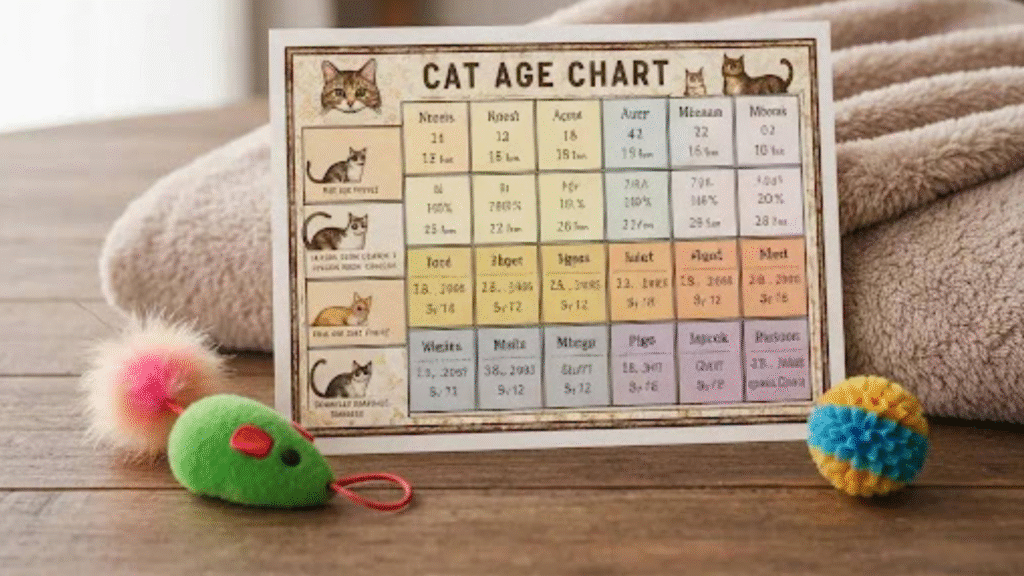
A clear age chart provides a quick reference when you need an immediate human-equivalent without calculation. The chart below maps common cat ages in months and years to human-year equivalents and notes developmental milestones so owners can match care actions like vaccinations, spay/neuter, and dental checks. Use this chart for fast decisions; consult a veterinarian for individualized adjustments based on health, breed, and environment.
| Cat age (months/years) | Human equivalent (approx.) | Developmental milestone |
| 2 months | 3–4 years | Socialization, weaning |
| 6 months | ~10 years | Rapid growth, sexual maturity approaching |
| 1 year | ~15 years | Young adult, full size |
| 2 years | ~24 years | Mature adult behaviors established |
This table helps owners quickly identify when to start adult diets, schedule spay/neuter (if not done), and plan for behavioral training during socialization windows. For situations where precision matters, use the stepwise formula or an interactive calculator described below.
How Does Cat Age Progress Through Different Life Stages?
Cat age progression follows distinct stages: kitten, young adult, mature adult, and senior, each with identifiable physical and behavioral markers that correspond to human-equivalent ages. Kittens show rapid neurological and social development in the first six months, young adults settle into full size and reproductive maturity by year one to two, mature adults maintain steady health through middle-age, and seniors display gradual declines in mobility, dental health, and organ function typically from around ten cat years onward.
Recognizing these stages helps owners plan preventive care, diet adjustments, and enrichment as their cat transitions between human-equivalent life phases.
Can You Use an Interactive Cat Years to Human Years Calculator?
An interactive calculator can add nuance by accepting inputs like age in months, indoor/outdoor status, and breed tendencies to refine the human-equivalent estimate. A good calculator is mobile-friendly, asks for clear inputs, and explains the conversion steps so results are transparent rather than black-box. If an interactive tool isn’t available, the chart and stepwise formula provide accurate fallbacks; both methods inform practical care choices such as frequency of vet visits and screening tests.
Calculator inputs should include:
- Breed or size: to account for known lifespan tendencies.
- Exact age: months and years for precision.
- Environment: indoor or outdoor to adjust risk factors.
What Are the Key Cat Life Stages and Their Human Age Equivalents?
Life stages guide owners on when to change diet, schedule vet screenings, and adapt care routines; mapping stages to human years clarifies expectations. The table below summarizes common stage names, start ages, and approximate human-year equivalents to serve as a reference for routine care planning.
| Life stage | Start age (cat) | Human equivalent (approx.) |
| Kitten | 0–1 year | 0–15 years |
| Young adult | 1–3 years | 15–28 years |
| Mature adult | 4–9 years | 32–52 years |
| Senior | 10+ years | 56+ years |
This mapping helps owners know when to transition from kitten to adult food, when to emphasize preventive dental care, and when to begin senior screening protocols. As you move from kitten to young adult care, plan vaccinations and behavioral enrichment accordingly.
How Old Is a Kitten in Human Years?
Kittens develop quickly: by three months they already resemble toddlers in energy and learning capacity, and by six months many approach pre-teen human equivalents in development. Month-by-month, a 3-month-old kitten maps roughly to a young child, a 6-month-old to about a 10-year-old human, and a 12-month-old to roughly 15 human years; these comparisons reflect neural maturation and social learning windows.
Owners should use these milestones to prioritize socialization, litter training, vaccination schedules, and nutrition appropriate to a high-growth phase.
What Defines a Senior Cat in Human Years?
A senior cat typically begins around 10–11 cat years, translating to mid- to late-50s or early 60s in human terms depending on conversion nuances and individual health. Common senior issues include dental disease, arthritis, kidney changes, and metabolic shifts that merit more frequent vet screenings, weight monitoring, and adapted diets.
Early detection through routine bloodwork, dental checks, and mobility assessments improves quality of life and can extend lifespan. Recognizing subtle changes in behavior and appetite is key to timely interventions.
What Factors Influence Your Cat’s Lifespan in Human Years?
Several variables shift a cat’s expected human-equivalent age by altering longevity, and owners can influence many of these through choices and preventive care. Key factors like environment, diet, breed predispositions, and regular veterinary care each change risk profiles and survival outcomes. The table below compares these factors with their typical effects and recommended owner actions to help extend a healthy lifespan.
| Factor | Effect on lifespan | Recommended action |
| Environment (indoor vs outdoor) | Outdoor increases trauma and disease risk | Keep cats indoors or supervise outdoor time |
| Diet & weight | Obesity shortens lifespan, balanced diet extends it | Provide high-quality diet and monitor weight |
| Veterinary care | Preventive care detects issues early | Schedule regular checkups and screenings |
Understanding these influences lets owners adopt practical steps—like indoor enrichment, weight control, and timely vet visits—to nudge a cat’s human-equivalent aging toward healthier outcomes.
How Do Indoor vs. Outdoor Environments Affect Cat Aging?
Indoor cats generally live longer because they face fewer hazards like traffic, predators, infectious disease exposure, and traumatic injuries, which directly shorten lifespan. Outdoor cats may age faster in human-equivalent terms due to cumulative risk of trauma and chronic infections; however, outdoor enrichment for indoor cats reduces stress and obesity risk.
Practical owner actions include supervised outdoor time, secure enclosures, microchipping, and stimulating indoor enrichment to combine safety with activity benefits.
What Role Do Diet, Breed, and Veterinary Care Play in Cat Aging?
Nutrition, genetic predispositions, and preventive medical care are interconnected drivers of longevity: high-quality diet and weight control reduce chronic disease risk, certain breeds carry inherited conditions affecting lifespan, and regular veterinary screenings catch problems before they progress.
Implementing balanced feeding, breed-aware monitoring, dental care, and age-appropriate screenings materially improves life expectancy and the mapped human-equivalent age. These strategies create a cumulative effect that slows age-related decline and supports better health outcomes.
Key preventive actions to extend lifespan:
Maintain healthy weight through portion control and exercise.
Schedule regular vet checkups for early detection.
- Provide dental care and age-appropriate nutrition.
Applying these steps consistently helps ensure your cat’s human-equivalent years reflect quality and longevity rather than premature decline.
Conclusion
Understanding how old are cat years in human years empowers pet owners to provide tailored care throughout their feline’s life stages. By utilizing the veterinary-backed formula and age charts, you can ensure timely vaccinations, dietary adjustments, and health screenings that align with your cat’s unique needs. Embrace these insights to enhance your cat’s well-being and longevity. Explore our resources for more tips on optimizing your cat’s health today.
Frequently Asked Questions
What are the signs of aging in cats, and how can I recognize them?
As cats age, they may exhibit various signs that indicate they are entering their senior years. Common signs include decreased activity levels, changes in appetite, weight loss or gain, and alterations in grooming habits. You might also notice behavioral changes, such as increased vocalization or withdrawal from social interactions.
Physical signs can include stiffness in movement, dental issues, and changes in litter box habits. Regular veterinary check-ups can help monitor these changes and ensure your cat receives appropriate care as they age.
How can I help my cat maintain a healthy weight as they age?
Maintaining a healthy weight is crucial for your cat’s overall health, especially as they age. To help your cat stay fit, provide a balanced diet tailored to their life stage, focusing on high-quality protein and appropriate calorie levels.
Regular exercise is also essential; engage your cat with interactive toys, climbing structures, or scheduled playtime. Monitor their weight regularly and adjust food portions as needed. Consulting your veterinarian for personalized dietary recommendations can further support your cat’s weight management and overall well-being.
What preventive health measures should I take for my senior cat?
Preventive health care is vital for senior cats to ensure they remain healthy and comfortable. Schedule regular veterinary check-ups, ideally every six months, to catch any potential health issues early. Vaccinations, dental care, and routine blood work are essential components of preventive care.
Additionally, consider adjusting your cat’s diet to a senior formula that supports their changing nutritional needs. Providing a comfortable living environment with easy access to food, water, and litter boxes can also enhance their quality of life as they age.
How does my cat’s breed affect its lifespan and aging process?
Different cat breeds have varying lifespans and health predispositions that can influence their aging process. For instance, some breeds, like Siamese and Burmese, tend to live longer, while others may be prone to specific health issues that can shorten their lifespan.
Understanding your cat’s breed can help you anticipate potential health concerns and tailor their care accordingly. Regular veterinary visits and breed-specific health monitoring can help manage these risks and promote a longer, healthier life for your feline companion.
What role does mental stimulation play in my cat’s aging process?
Mental stimulation is crucial for maintaining cognitive health in aging cats. Engaging your cat with interactive toys, puzzle feeders, and new experiences can help prevent cognitive decline and keep their minds sharp. Activities that encourage exploration and problem-solving can also reduce boredom and associated behavioral issues.
Additionally, social interaction with humans and other pets can provide emotional enrichment. Incorporating regular mental challenges into your cat’s routine can significantly enhance their quality of life as they age.
Are there specific dietary changes I should make for my aging cat?
As cats age, their dietary needs change, necessitating adjustments to their food. Senior cat diets typically contain fewer calories to prevent obesity, higher fiber for digestive health, and added nutrients like omega fatty acids for joint support.
It’s also essential to ensure that the food is easy to chew, as dental health can decline with age. Always consult your veterinarian before making significant dietary changes to ensure that your cat’s specific health needs are met and to select the best food options for their age and condition.