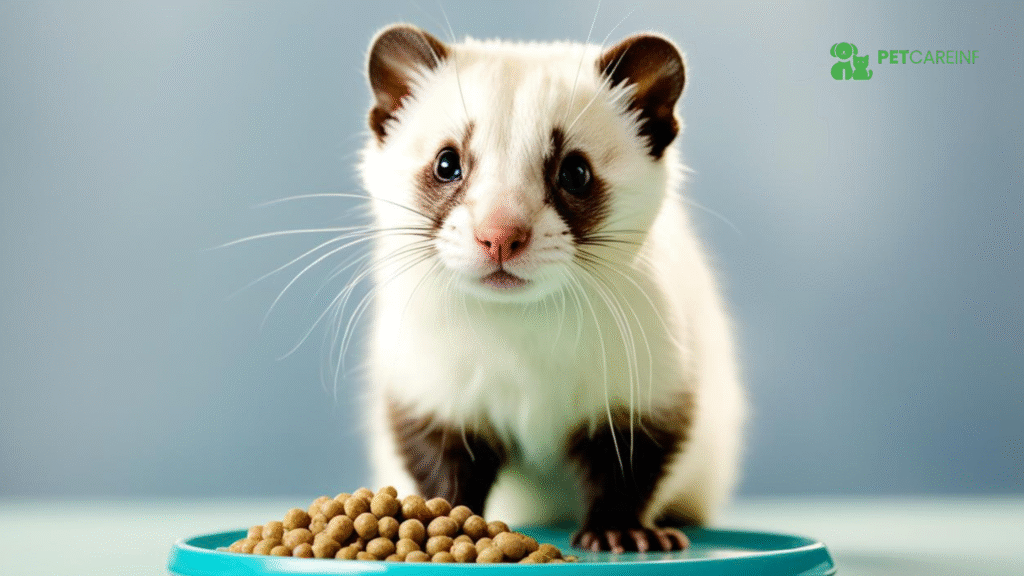
What can ferret eat? Ferrets are true meat eaters. They have a small body which burns energy very quickly thus requiring to drink and eat a lot of food. The most delicious ones are the ones prepared using authentic meat such as chicken, turkey or beef. Good ferret food can also be given, which is intended to be fed on a daily basis. These foods contain the correct content of protein and fat which makes them powerful. Bread, fruit, or sweets are to be avoided as the stomach cannot treat sugar or grains. Giving your ferret the correct food will make your ferret stay active, healthy, and playful throughout the day. This guide explains what can ferret eat safely and how to plan easy daily meals.
Understanding Ferret Food Needs
Ferrets are also obligate carnivores; this implies that their digestive system is adapted to consume animal protein and fat as opposed to plant foods. Ferrets are almost completely carnivorous and therefore, cannot tolerate eating grains and vegetables unlike some pets. Their digestive system is also extremely short and food goes through their body in a period of between three to four hours, hence making ferrets have to take several small meals throughout their day. The normal diet of a ferret should have the following components: 35-40 percent of high-quality animal protein and 15-20 percent of fat with extremely low fiber or carbohydrates.
Real meat sources like chicken, turkey, and beef should be used in protein sources as opposed to plant-based sources. When learning **what can ferret eat**, it is important to avoid foods with corn, rice, soy, or fruit sugars because ferrets cannot digest these properly. In the long run, high carbohydrate or sugar diets may cause severe health problems including, but not limited to, digestive problems, obesity or insulinoma, which is a prevalent illness in ferrets. A meat based diet where availability of fresh water is a permanent solution contributes to the development of strong muscles, healthy fur and even energy levels. Understanding **what can ferret eat safely** allows owners to create a diet that matches the ferret’s natural eating habits, keeping the pet active, playful, and healthy for many years.
Everyday Food Choices for Ferrets
When fed on good quality animal protein daily, ferrets remain strong and healthy. They are also obligate carnivores and hence most of their food ought to be meat-derived as opposed to plant-derived foods. When planning what can ferret eat, focus on simple, natural foods that match their carnivorous diet. Small pieces of plain cooked chicken, turkey or beef are also good sources of proteins in the day-to-day. These meats contain the amino acids that ferrets require to have strong muscles, healthy organs, and the constant energy levels. No seasoning, no oils, no sauces, as ferrets can process bare meat much more effectively than processed food. Another healthy additive is a boiled egg once or twice a week.
The eggs contain healthy fats, nutrients and protein which keep the coat of your ferret soft and shiny. Other owners also give a little bit of egg yolk as a treat although it should be given in very small quantities to prevent digestive discomfort. Occasionally liver or heart can also be offered as organ meat. These are food products rich in beneficial vitamins and minerals such as iron, vitamin A, and taurine which promote proper health. But due to the richness of organ meats, one should receive them in little amounts once a week. Included with the meals that are based on meat, be sure that your ferret is given fresh water every time, and that it is clean water. A can of water or a heavy bowl can be used to avoid spills. Balanced feeding and unrestricted access to water is good in keeping your ferret active, full of energy and playful all day long.
Recommended Products for Feeding Ferrets
The importance of feeding your ferret the right food is significant in ensuring the health, activity, and energy of the animal. Since ferrets are carnivorous creatures, their food must be constructed primarily of animal protein and healthy fat. Real meat is the main ingredient in the best ferret foods and there are very few carbohydrates, grains, or sugar in them. In selecting a commercial food diet of a ferret, the ingredient list and the nutritional label should be checked. A healthy product must have protein that is at least 3540 percent and fat of about 1520 percent, which helps in muscle development, healthy skin and good energy reserves.
The nutrients that ferrets require to keep them active and have a shiny coat are available in ingredients like chicken, turkey, fish meal and eggs. Another feeding method used by most of the ferret owners is the combination of various types of food to make meals exciting. Daily meals are usually fed using dry kibble that is used to keep the teeth healthy and leave it to have at regular intervals. Sometimes, soft foods, freeze-dried raw diets, or healthy meat treats can be added to make the diet more diverse and to give it additional nutrients. Some of the most appropriate ferret food products that adhere to these nutritional recommendations and are highly recommended by the experienced ferret owners and small-pet experts are listed below. These choices will enable you to eat a well-balanced diet and will also simplify and make it easy to feed your ferret.
Wild Harvest Advanced Nutrition Diet for Ferrets
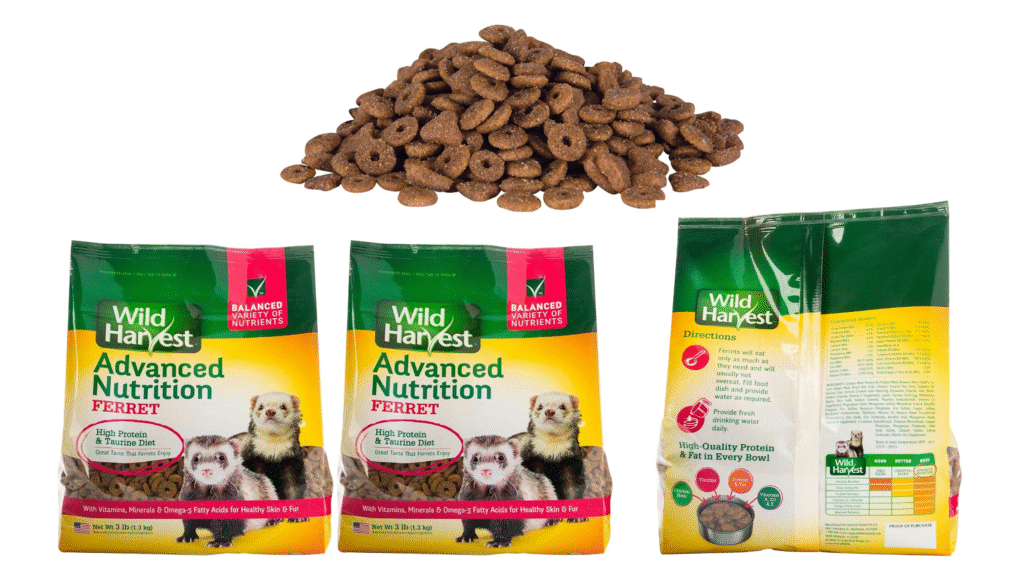
Wild Harvest Advanced Nutrition Diet is a nutritionally balanced diet in dry form that is used to satisfy the nutritional requirements of active ferrets. It contains the actual chicken protein, fish oil, additional taurine, which promote heart health, muscle growth, and soft and shiny coat. Egg and brewer yeast have also been added to the formula to aid in digestion and give constant energy in a day. Since ferrets need a high-protein diet which is based on meat, this food serves as the main meal in combination with fresh water and meat bonuses. Its sweet smell and crispy bite endears it to the majority of ferrets including the choosy ones. It is an option that many of the owners use daily as a feeding alternative due to its ease of storage and reliable nutrition.
- Brand: Wild Harvest
- Flavor: Chicken
- Form: Powdered dry food
- For: All life stages
Marshall Premium Ferret Diet – Chicken Blend
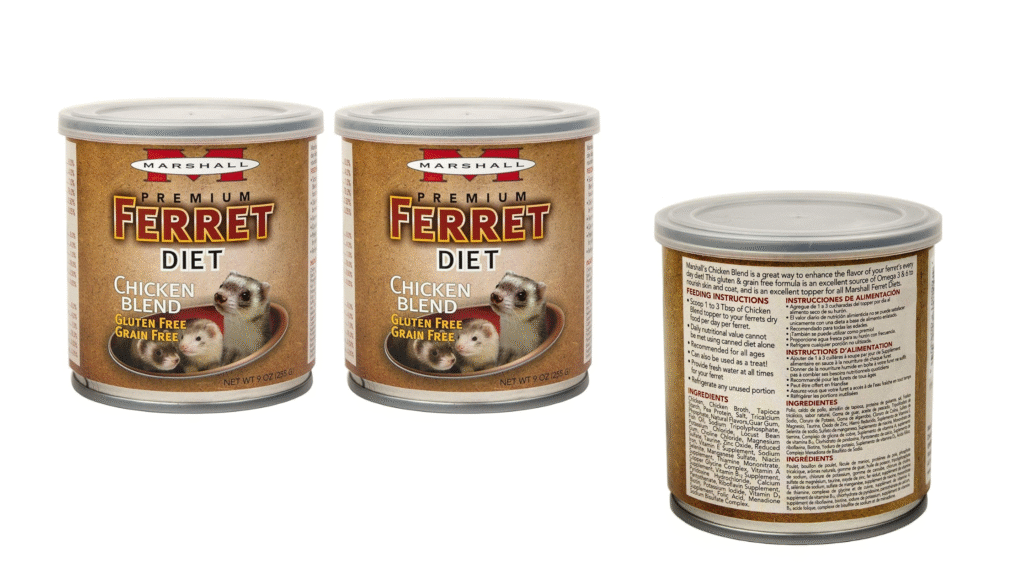
Marshall Premium Ferret Diet- Chicken Blend is a soft food that is rich in proteins and is targeted at ferrets. It is prepared using actual chicken and liver, which supplies the ferals high animal protein that is needed to keep them robust and energetic. The recipe contains fish oil containing Omega-3 and Omega-6 fatty acids, which are useful in keeping the skin, a shiny coat, and general wellbeing good. It is a gluten-free and grain-free recipe that is easily digested and can be fitted as a topper on wet foods and dry ferret kibble. A large number of its owners use it to enhance taste and persuade picky ferrets to go by their usual meals. The easy pop-top resealable lid conveniently stores food and makes it easy and neat to eat.
- Brand: Marshall Pet Products
- Flavor: Chicken and liver
- Form: Wet food topper
- For: All ages
N-Bone Soft Ferret Treats – Chicken Flavor
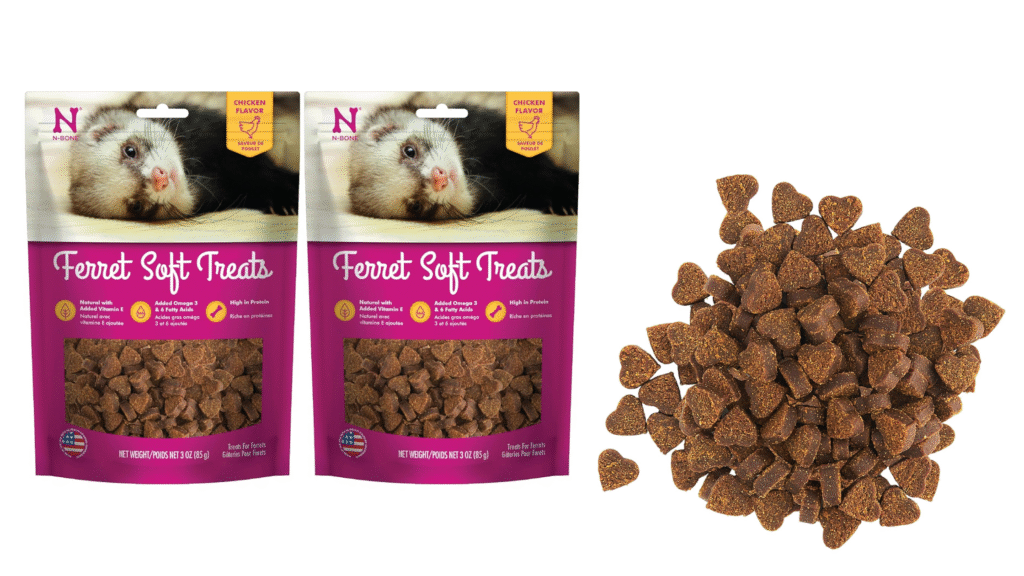
A common example of a reward snack is the N-Bone Soft Ferret Treats, which are crafted with natural ingredients and real chicken, that is energy-neutral and complies with the meat-based diet of a ferret. They are soft and therefore, simple to chew and digest, a feature useful to ferrets with tender teeth or smaller jaws. Omega-3 and Omega-6 fatty acids are also found in these treats and assist in keeping the skin healthy and keeping a coat shiny and smooth. Due to the fact that ferrets are sensitive to minor reward, these treats are great in terms of training, bonding, or even snacks in between meals. They are however, to be administered in small portions and should not substitute a balanced ferret diet. It is a good reward to have one or two pieces in a day but it will not increase the number of extra calories significantly.
- Brand: N-Bone
- Flavor: Real chicken
- Form: Soft chew treat
- For: Adult ferrets
Wysong Ferret Epigen 90 Digestive Support & Archetype Chicken Formula Raw Ferret Food
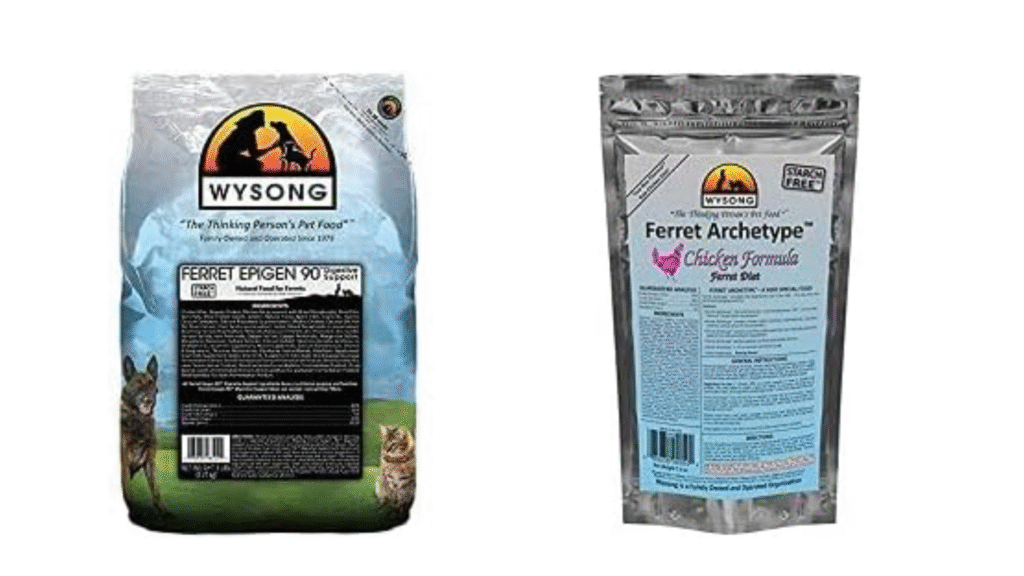
Wysong Ferret Epigen 90 has been regarded as one of the top protein ferret foods, which has been specifically developed with regard to the nutritional requirements of obligate carnivours. This formula contains approximately 62 percent animal protein and 16 percent fat, which is a close remnant of a ferret-based diet of meat. It is composed majorly of chicken and other animal based and good quality ingredients, which assist in maintaining strong muscles, good energy levels, and overall body. The food mixes a dry kibble with freeze-dried raw formula, which will preserve natural nutrients and enhance digestibility. The method may prove useful among ferrets that have delicate stomachs, allergies to food or with selective eating patterns. Owners prefer Wysong due to the fact that it is free of unwarranted fillers, grains, and added sugars, and therefore it is a nutrient-rich food to feed their pets on a daily basis.
- Brand: Wysong
- Flavor: Chicken
- Form: Dry kibble and freeze-dried raw
- Weight: 5 lb (dry), 7.5 oz (raw)
- For: All life stages
N-Bone Ferret Chew Sticks – Bacon Flavor
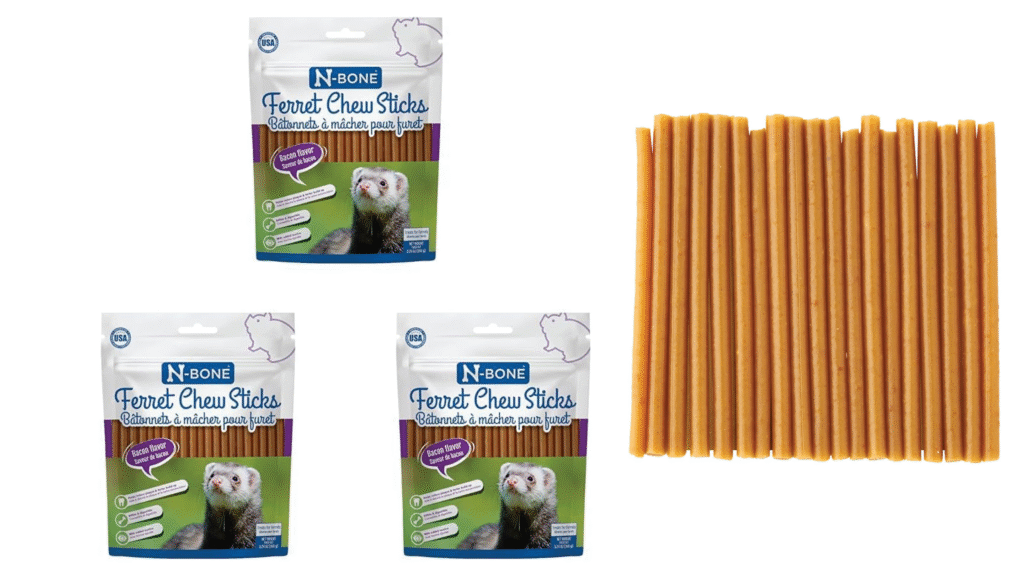
N-Bone Ferret Chew Sticks are chew sticks (stretched) that are tasty to be used as a supplement and to maintain dental health. These sticks contain DHA and taurine that are made with natural pork and fish oil and are used to support healthy brain activity, muscle growth, and vitality in ferrets. Omega-3 and Omega-6 fatty acids are also present in the formula that help in the maintenance of a healthy skin and a shiny coat. These chew sticks are hard and they assist in reducing the amount of tartar and plaque as your ferret chews which helps ensure that there is more dental hygiene. They can also be used as a delicacy to ensure that ferrets are kept interesting and are not bored. Owing to their appetizing taste and chewing duration, most ferrets use them as a snack between meals.
- Brand: N-Bone
- Flavor: Bacon
- Form: Stick chew
- For: All life stages
Foods to Avoid
The digestive system of ferrets is highly sensitive as it is made with the purpose of consuming meat rather than plant food. Since they are obligate carnivores, their digestive system is unable to digest grains, fruits or sweetened food. Stomach problems, poor nutrition, or severe health problems may occur quite fast after feeding on the wrong foods. The following are typical foods that must never be incorporated into the dieting of a ferret.
- Bread, pasta, and rice: Such food is comprised of carbohydrates and fillers which ferrets are unable to digest well. They can temporarily fill a ferret but give it practically no useful thing to eat.
- Fruits and sweets: Fruits have natural sugar, which may damage the pancreas of a ferret. Frequent consumption of sugar predisposes the insulinoma, which is a frequent illness in ferrets.
- Chocolate and candy: Chocolate has the poisonous substances of little animals. Ferrets should never be exposed to even small doses of this because they can be severely poisoned.
- Milk or cheese: Majority of ferrets are lactose intolerant. Dairy items are associated with stomach upsets, gas and diarrhea.
- Dog food: Dog food normally has excessive quantities of grains and insufficient quantities of protein or fats in ferrets. In the long-run, the feeding of dog food may result in poor nutrition and deficiency of energy.
- Cooked bones: Bones that are already cooked are easy to splinter and can cut teeth or get lodged in the digestive tract or the throat.
Keep all of these foods away from your ferret’s diet. Always stick with meat-based meals, fresh water, and safe treats made just for ferrets. Feeding your ferret the right food keeps it healthy, active, and free from stomach problems.
Can a Ferret Eat Cat Food?
Whether the use of cat food as an alternative to ferret food is a good idea is a question many novices to the keeping of ferrets ask. The answer to the question is yes, albeit temporarily and to some kinds only. Ferrets need a diet of great animal protein and fat and therefore kitten food is used occasionally as a temporary replacement. The kitten formulas tend to be more protein and fat-rich than the adult cat food, and thus more closely aligned with the nutritional requirement of the ferrets. Not every cat food is appropriate though. Although making a decision, never forget to look at the ingredients list.
The original product must be real meat, i.e. chicken, turkey, or fish. It is better to avoid the products that contain corn, wheat, soy, or plant proteins as major components. Ferrets find these fillers hard to digest and are not of much nutritional use. Ferret food should not be substituted with cat food in the long run. In the long run, you can have nutritional imbalances, which can impact the coat of your ferret, muscle strength and health by feeding on cat food. Ferrets have special diets, which are designed to address their special digestive and metabolic requirements. In case you have to feed your cat on cat food, feed them good kitten food and lots of fresh water and feed them good ferret food as soon as you can. This will keep your ferret on track to the right nutrients to maintain activity, well-being and liveliness.
Simple Daily Feeding Plan
Ferrets have a very high metabolism rate meaning that they consume energy fast and should take small meals during the day. Ferret usually eats six or eight times a day as opposed to the one or twice a day that dogs or cats eat. Due to this reason, a large number of owners maintain a small portion of good quality ferret food at all time to ensure that its ferret has the ability to snack anywhere anytime it is hungry. The young ferrets tend to feed more frequently than adults since they are in the process of growing and require additional energy. You can later on add small amounts of fresh meat or protein delicacies to provide variety and additional nutrients with the dry food.
| Time | Meal | Notes |
| Morning | Dry ferret kibble with clean water | Keeps energy steady for the day |
| Noon | Small cooked chicken piece | Adds fresh protein for strength |
| Evening | A mix of kibble and soft meat | Keeps bowl half full overnight |
| Bedtime | Boiled egg or a soft ferret treat | Gives extra fat before rest |
Ferrets lose energy fast because they have a short digestive system. Never let their food bowl stay empty. Always keep fresh water close by and change it at least twice a day. Following this plan helps your ferret eat well, grow strong, and stay playful all day.
Key Feeding Facts
The digestive system of ferrets is very rapid in nature and this means that they digest food very fast and require to feed regularly in the day. The normal feeding schedule of most ferrets is every three to four hours and therefore having food around is a way of ensuring that a ferret does not wear itself out. Frequent consumption of high-protein meals helps maintain strong muscles, healthy skin and soft shiny coat.
Food is not any better than fresh water. In order to prevent thirst, the ferret needs clean drinking water in a stable bowl or bottle, and should change it at least twice a day. Milk or dairy should be avoided since most ferrets are lactose intolerant and this may cause stomach upsets as well as diarrhea. Heavy metal or ceramic bowls can be used to avoid falling of ferrets when eating or playing. Leftover food should also be eliminated and bowls should be washed on a daily basis so that bacteria do not accumulate. Lastly, avoid sweets, fruit and sweet tasting things, because sugar is dangerous to the health of a ferret. These are easy feeding routines that will keep your ferret healthy, active and energetic.
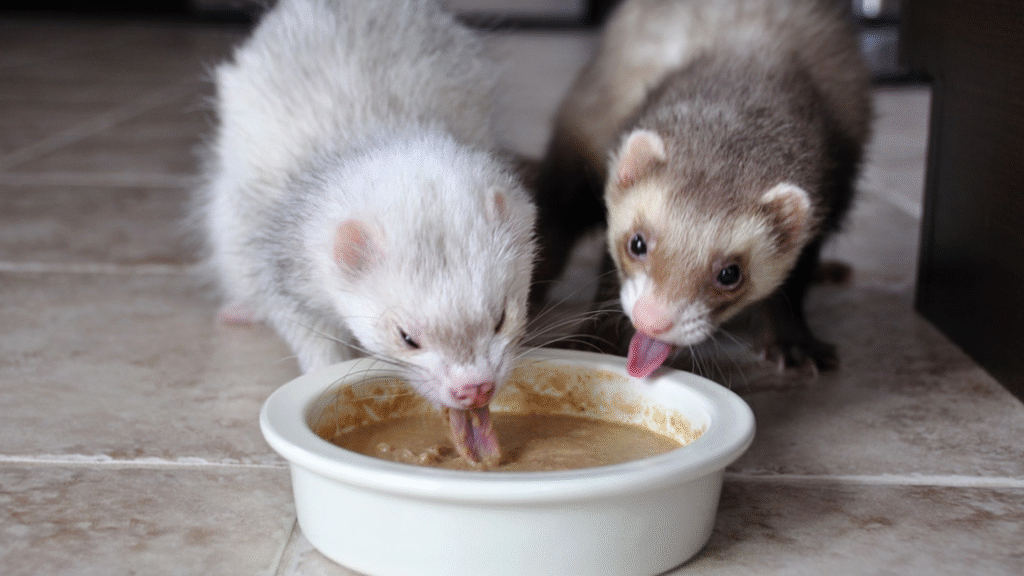
How To Feed a Ferret
It is easy to feed a ferret right after learning about its natural feeding habit. Ferrets are obligate carnivores, meaning they have extremely high-paced metabolisms, that is, they like numerous small meals during the day, as opposed to large meals. Learning what can ferret eat helps you provide the right balance of protein, fat, and hydration for daily health. One way to do this is to make sure that there is good quality dry ferret food at all times in the cage. Ferrets will snack multiple times throughout the day and with constant availability of kibble they are kept energized.
Besides kibble, it is sometimes good to provide small amounts of cooked chicken or turkey once or twice a day to provide freshness and variety in the protein. However, other owners add a minor portion of soft food or wet topper to enhance the flavor and keep their ferret enthusiastic about eating. When you opt to consume raw meat, then ensure that it is freshly acquired and stored, and consumed using clean cutlery. Feed bowls should always be washed after one meal and meat should never be stored long or have a strange smell. Ferrets are susceptible to poor food hygiene, which results in digestive illness within a short duration.
The treats must be small, and meat-based, e.g. a piece of boiled egg or a ferret-safe training treat. Do not feed your ferret with human snacks such as chocolate, biscuits, bread or salty foods which can damage the digestive system and teeth of your ferret. Food is no more important than fresh water. Cover the water with a bowl or bottle that is always put in clean drinking water and changed at least every two hours. The regular feeding schedule, high-protein food, and the clean dishes will keep your ferret healthy, active, and happy on a daily basis.
Conclusion
Understanding what can ferret eat is the key to keeping your pet healthy, energetic, and happy. The fast metabolism and the active lifestyle of ferrets favor the diet of meat based high in animal protein and healthy fat. Ferret food, fresh meat treats and regular access to clean water at all times will keep the muscles strong, the digestion healthy and the coat of the ferret shiny. There is also the need to stay off of foods that ferrets are unable to digest like fruits, grains, sugar, and processed snacks of human beings. These foods may appear to be harmless but can lead to problems with digestion and the development of chronic health problems. With the help of a simple feeding schedule, picking the right types of foods to feed your ferret, and keeping food bowls clean you can make sure that you will have a playful, strong, and healthy ferret in your family many years.
Frequently Asked Questions
What can ferrets eat?
Ferrets consume a meat based diet since they are obligate carnivores. Cooked beef, chicken, turkey or lamb that is cut into small pieces are safe foods. Good ferret food that is made out of actual meat is also crucial in daily feeding. Fruits, bread and sweet should be avoided, as ferrets cannot ferment sugar or fiber.
Can ferrets eat cat food?
When ferret food is not available ferrets can temporarily be fed on kitten food. Kitten food has more protein and fat as compared to adult cat food, thus approaching a diet of a ferret. Nevertheless, it must be temporary since the food that is particular to ferrets offers better energy on long-term basis.
What human food can ferrets eat?
Small amounts of plain cooked chicken, turkey and a boiled egg can be safely consumed by ferrets. These foods contain protein which is equivalent to their natural diet. Human snacks to avoid include bread, milk, candy, or chocolate since it has sugar or lactose which ferrets cannot digest well.
What do ferrets eat in the wild?
The wild ferrets survive because they hunt small animals like mice, rabbits, birds and frogs. Their food is all meat and animal protein. They do not consume fruits, grains or vegetables in the wild hence the reason that domestic ferrets also need a high-protein, meat-based diet also.
What is the best ferret food?
The most suitable ferret food will include a minimum of 3540 percent protein and a minimum of 1520 percent animal fat. Good choices are ferret-specific foods such as Wild Harvest, Marshall, and Wysong. These products are based on the use of real meat and they do not include grains or sugar, which allows ferrets to remain healthy, active, and strong.